
The Return of the Jedi Luke Skywalker costume is sold as one black outfit. It is two black garments with six pieces layered over them, arranged into five configurations across the film, and one glove that pins any photograph of it to a specific scene.
Most costume pages describe the black, list a tunic, and stop. This page takes the outfit apart instead, counts what is actually there, and shows which piece disappears in which look.
Two claims below contradict what a lot of listings repeat. The outfit is not a jumpsuit, and the vest does not survive to the last act. Both are checkable against production photographs rather than against a description.
What makes the outfit built for the 1983 film hard to copy is not the sewing. It is the number of separate pieces, because each one is a different material and a replica cut from a single black cloth reads wrong from across a room.
What’s on This Page
- The Short Answer: Two Garments and Six Add-Ons
- Why It Is Not a Jumpsuit
- The Six Pieces That Go Over It
- The Five Looks, One at a Time
- The Glove Is a Timestamp
- The Bib Corner, and Why It Matters
- The Belt Was a Dye Job
- Reading a Photo Back to a Scene
- What to Get Right If You Are Building One
- The Saber That Goes With It
- FAQ
The Short Answer: Two Garments and Six Add-Ons
Count the pieces rather than the looks. Eight in total: a shirt and a pair of trousers in black gabardine, plus six separate items that go over them in different combinations.
The shirt is a tunic with a mandarin collar, a front opening built in layers the way a shirt is rather than zipped shut, and deep armholes cut in a V. Its most distinctive part is a bib flap across the chest, lined on the reverse in light grey.
The trousers are cut on a breeches pattern: full through the thigh, gathered below the knee, with a stripe running down each of the two side seams. That cut is why the legs read as tailored rather than loose.
The six add-ons are the vest, the tabard, the sash, the belt, an outer layer, and the glove. The outer layer has two forms, a hooded cloak and a camouflage poncho, and only one of them appears at a time.
No look in the film uses all six at once, because the cloak and the poncho never appear together.
| Piece | What it is | Material | Job it does |
|---|---|---|---|
| Tunic and trousers | Two garments, same cloth | Black gabardine | The base every look is built on |
| Vest | Close-fitting sleeveless layer | Raw silk tussah | Adds a grey-black surface over the tunic |
| Tabard | One piece wrapping the back of the neck | Raw silk tussah | Hangs front and back over the tunic |
| Sash | Wide wrapped band | Raw silk tussah | Takes the place of the belt on Tatooine |
| Belt | Leather, with a saber hook | Brown leather dyed black | Carries the saber, closes the tunic |
| Outer layer | Hooded cloak or camouflage poncho | Wool crepe, or printed canvas | Weather and concealment |
| Glove | One, right hand only | Black leather | Covers the mechanical hand |
One detail decides how the whole thing photographs. The vest, the tabard and the sash are cut from one raw silk, dyed together, and they must match or the middle of the outfit breaks into stripes.
Why It Is Not a Jumpsuit
The one-piece reading comes from the fact that both halves are the same cloth, and it falls apart at the waist in any photograph taken on set.
A jumpsuit has no break at the waist, because there is nothing there to break. This outfit has a tunic skirt that ends around the upper thigh, and trouser legs that continue underneath it.
Behind-the-scenes photographs of the actor with the outer layers off show both hems at once. That is the whole evidence, and it is enough.
On screen the break is easy to miss. Black on black hides a horizontal line, and the tabard hangs over the front of the waist in the scenes where people look for it.
This matters more for a build than it sounds. A jumpsuit cannot be re-fitted at the waist, cannot be worn with the vest tucked in, and cannot produce the last look in the film at all.
The Six Pieces That Go Over It
Each of the six is a different material, and that is the real reason a single-black-fabric replica reads wrong from a distance.
The vest is one of three raw-silk pieces, thin, close-fitting, with a collar cut on the bias so it stands rather than folds. It is not wool, which is an older reading that costume researchers have since corrected against surviving pieces.
The tabard is raw silk as well, cut as one piece that wraps the back of the neck and falls front and back. It is not two straps sewn at the shoulder, and the difference shows in how it moves.
The sash is the third raw-silk piece. It wraps the waist and knots at the left, and it holds the tunic closed in the scenes before the belt appears.
The belt is leather, and the section below covers what was done to it. The outer layer is either a hooded half-circle cloak in muddy brown wool crepe or a camouflage poncho in printed canvas.
The glove is black leather, and there is exactly one of them in the entire costume. Nothing on the left hand ever changes.
The Five Looks, One at a Time
Five configurations appear on screen, and the last of them strips the outfit back rather than adding to it.
The first look is the palace: base, vest, tabard, sash, and the hooded cloak over everything with the hood up. No belt, and both hands bare.
The second is the sail barge and the skiff. The cloak comes off and the hood with it. The vest, tabard and sash stay exactly as they were.
The third begins as he leaves Tatooine. The glove goes on here, and stays on. By the Rebel briefing the sash has been replaced by the leather belt, which now carries the saber on the left hip.
The fourth is Endor, where a camouflage poncho goes over the black base and is tucked under the belt rather than worn loose. A commando helmet goes over the head, and the boots are knee-high and articulated.
The fifth is the Death Star and the duel. The vest and the tabard come off, and so does the belt. What is left is the base in black from collar to boots, with the bib corner folded down.
| Look | Outer layer | Torso | Waist | Right hand |
|---|---|---|---|---|
| 1. Jabba’s Palace | Hooded cloak, hood up | Vest, tabard | Sash | Bare |
| 2. Sail barge, skiff | None | Vest, tabard | Sash | Bare |
| 3. Leaving Tatooine, briefing | None | Vest, tabard | Belt from the briefing | Gloved |
| 4. Endor | Camouflage poncho | Base, poncho over it | Belt | Gloved |
| 5. Death Star, duel | None | Base only | None | Gloved |
The table is the useful thing to carry into a fitting room. Print it, and check which column the costume in front of you is actually filling.
The middle of the bar is the only place the outfit changes hands without changing clothes.
The Glove Is a Timestamp
The glove is on the right hand only and arrives at one exact moment, which makes it the most reliable date marker in the whole outfit.
During the fight on the sail barge his right hand takes a blaster hit. The synthetic skin over the mechanism is burned through, and he is bare-handed for that entire sequence.
The glove goes on as he leaves Tatooine, and it stays on through the visit to Dagobah, the briefing, Endor and the Death Star. It never comes off again in the film.
That gives you a clean rule. A bare right hand means Tatooine or earlier. A gloved right hand means Dagobah or later, and nothing in between.
The reason the glove exists is worth knowing, because it explains why it never comes off. At the end he cuts off the villain’s hand and sees the mechanism inside it, then looks down at his own gloved hand. The costume is doing the work of the scene.
Reference material gets this wrong in both directions. Some of it puts the glove on the earlier desert scenes, where it is not present, and some leaves it off the Endor scenes, where it is.
The Bib Corner, and Why It Matters
The front of the tunic is a separate flap rather than a closed placket, and one corner of it unpins and folds back, which is the change that separates the last look from the fourth.
The bib is a layered panel that sits over the front opening, shaped to read as a single front. On its reverse is a light grey lining.
For most of the film the flap is pinned shut at the top corner, and the front reads as solid black. For the Death Star scenes the top corner comes unpinned and folds forward, showing the grey.
It is a small change that does a lot. With the vest gone in that look, the torso would otherwise be a flat black slab, and the folded corner breaks it at the shoulder.
For a build this is a structural decision rather than a trim detail. A tunic with a front that is sewn shut cannot produce the last look, so if you only ever want one tunic, this is the corner to leave workable.
The pale triangle is the lining, and it only exists in the last two scenes.
The Belt Was a Dye Job
The belt is the previous film’s holster belt, dyed black over brown leather, and the buckle is held by two snaps on the inside rather than through the face.
In the 1980 film the belt is brown and carries a holster. For this one it was re-dyed black, apparently without stripping the original finish first, three years later.
That is why surviving pieces show brown coming through where the dye did not take. On screen under film lighting it reads as solid black, so the patchiness was never visible to an audience.
The buckle is octagonal, eight even sides, held closed by two metal snaps mounted on the inside of the belt rather than through its face. The loose end tucks underneath the band rather than passing through the buckle.
A saber hook sits on the left hip. Set the belt on a table with the tail threaded through the buckle and it looks wrong in a way most people can see but cannot name.
In our view the honest answer is that a clean modern black leather belt looks better than a patchy re-dye, and nobody at a convention is going to inspect the inside of yours for original brown.
Reading a Photo Back to a Scene
Five checks will place almost any photograph of this costume in a specific scene, and four of them are about what is missing.
Start with the right hand, because the glove is binary and it never reverses. Bare means Tatooine or earlier, and gloved means everything from the departure onward.
Then the outer layer: a hooded brown cloak puts you in the palace and nowhere else, and a camouflage poncho puts you on Endor and nowhere else.
Then the torso: the vest belongs to the middle of the film and is gone in the last look, so a photograph without a vest is either the Death Star or the duel.
Then the corner of the bib. A pale grey triangle at the right shoulder confirms the last look even when the framing crops everything below the chest.
| What you see | What it rules in | What it rules out |
|---|---|---|
| Bare right hand | Palace, sail barge | Everything from the departure onward |
| Gloved right hand | Departure, briefing, Endor, Death Star | The two Tatooine sequences |
| Hooded brown cloak | Jabba’s Palace | Every other scene |
| Camouflage poncho | Endor | Every other scene |
| No vest, grey corner showing | Death Star, final duel | The first four looks |
Running the same checks backwards is our fastest way to spot a photograph that has been assembled rather than taken, because they contradict each other on costume builds that mixed two looks together.
What to Get Right If You Are Building One
Four decisions carry most of the accuracy, and three of them are about material rather than shape.
Make the tunic and the trousers as two garments in the same cloth. That single decision gives you the waist break, the ability to tuck, and the last look.
Cut the vest, the tabard and the sash from one dye lot of raw silk. Three near-black fabrics from three sources will read as three different colours under convention lighting.
Keep the front opening workable, and line the bib in a light grey that is clearly lighter than the tunic. If the lining is another near-black, folding the corner does nothing.
Get the glove right, because it is the cheapest item and the most legible. One black leather glove, right hand, and no second glove anywhere.
If you are pairing the costume with a weapon, the saber that belongs to this outfit is the thin-neck hilt rather than the earlier flashgun-shaped one, and our timeline of every Luke Skywalker prop covers what changed and when.
For the wider question of which weapon suits which character, the cosplay pairing guide does that job and we would rather send you there than repeat it.
The Saber That Goes With It
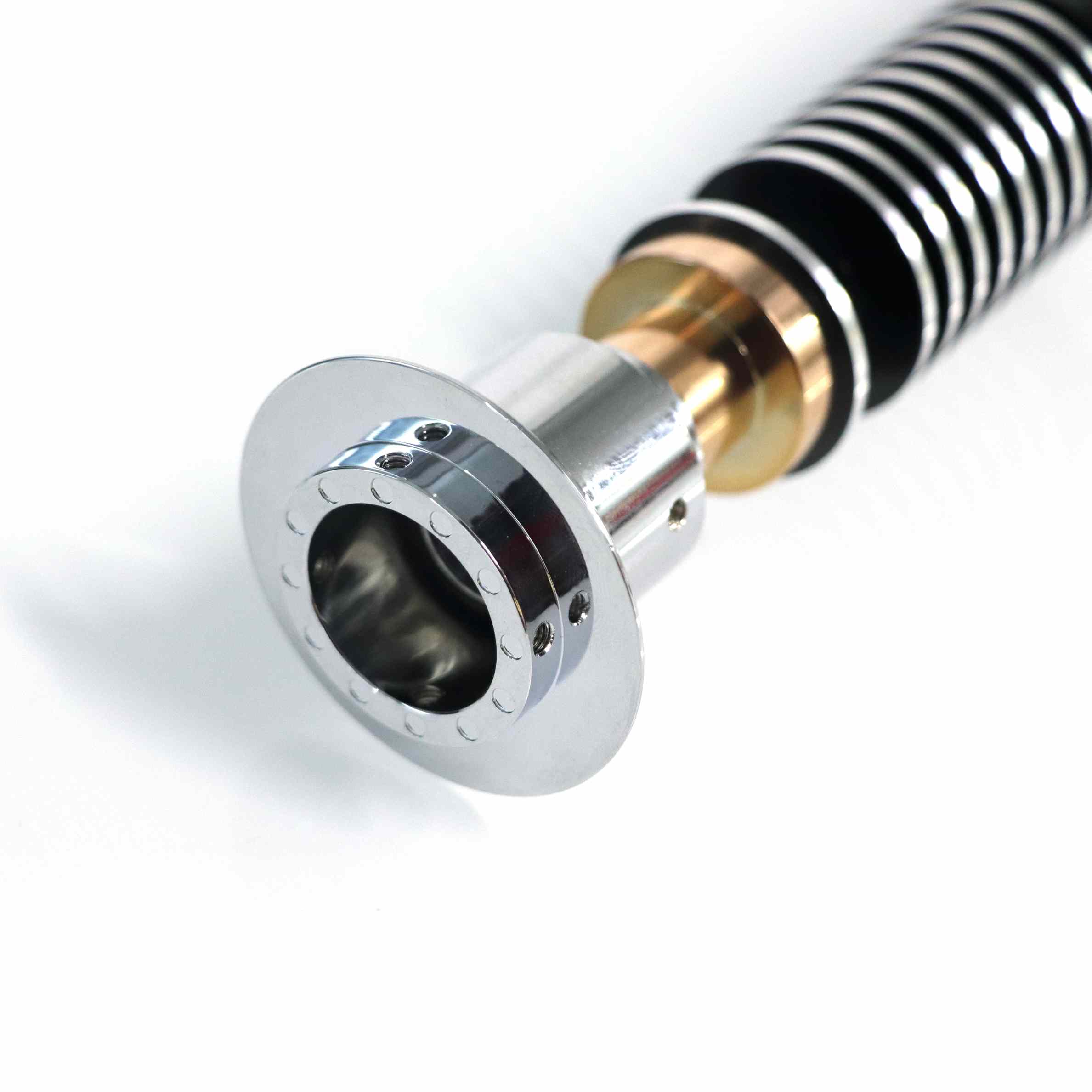
The hilt that matches this costume is a thin-neck design with a black ribbed grip, a brass-toned collar under the emitter and a ring at the pommel.
The thin neck is the part that matters here, because it is what separates the sabers from this film from the earlier ones. A thick body with a clamp band reads as the wrong era instantly.
The practical worry with a thin neck is the grip. Ours is built so the neck does not sit where your hand goes, which keeps it usable for spinning and light duelling rather than display only.
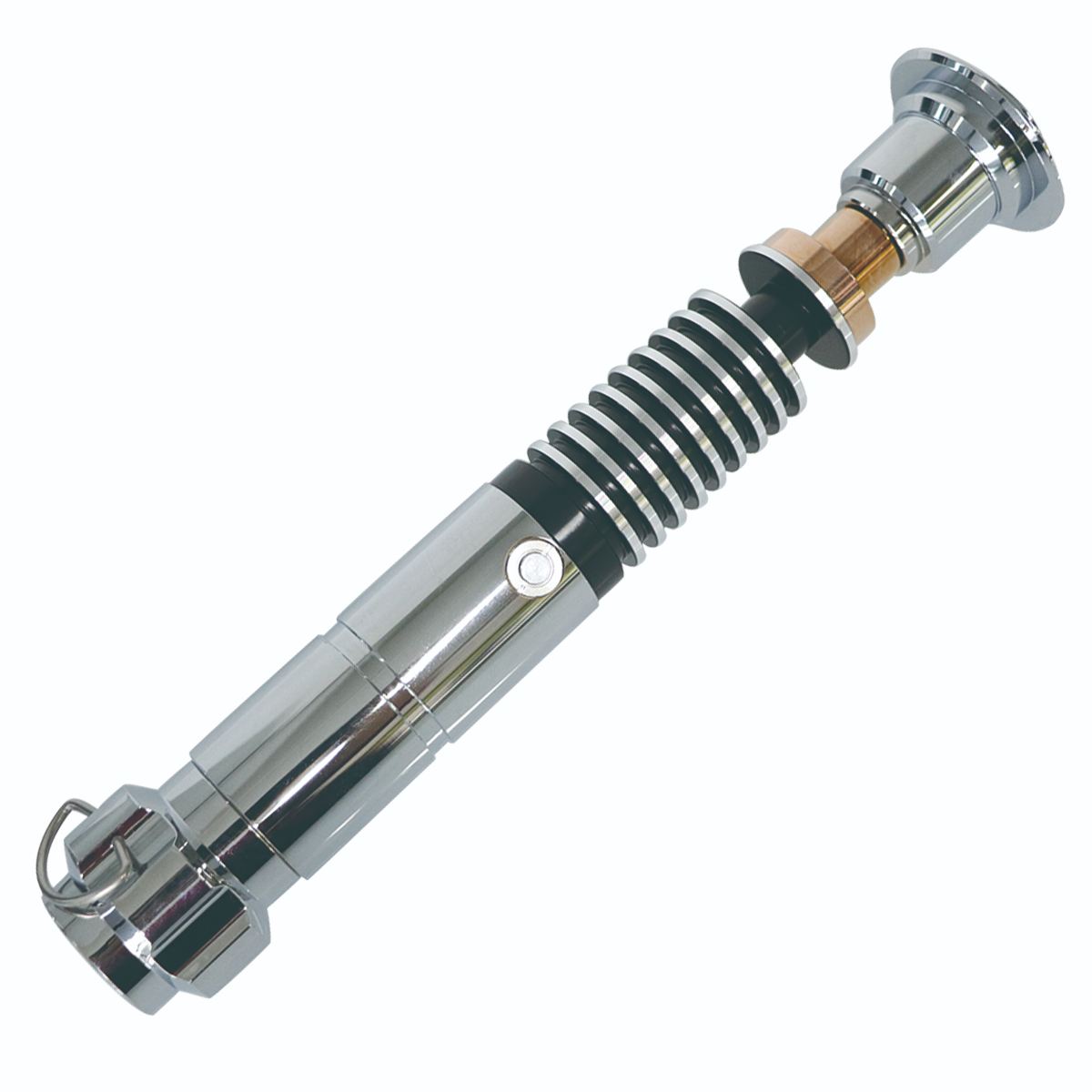
The body is a three-tone finish: polished body, black ribbed section, brass collar. That is a surface decision rather than a measurement, and we would rather say so than let a photograph imply something the spec does not.
The blade is polycarbonate and the electronics run a colour-cycling RGB board with single-button operation, so the blade colour can be set to green for this costume and to something else when the costume changes.
Luke Lightsaber
Character Lightsabers / Luke Skywalker Lightsaber
Every Luke Skywalker prop
Which saber for which character
What a trooper costume costs
What a hilt is made of
FAQ
Q1: Is the Return of the Jedi Luke Skywalker costume a jumpsuit?
A: No. It is a tunic and a pair of trousers in the same black gabardine, and behind-the-scenes photographs show both hems at once. The black-on-black hides the break at the waist on screen.
Q2: How many different outfits does Luke wear in Return of the Jedi?
A: Five configurations of one base outfit. They run from the palace to the sail barge, the departure and briefing, Endor, and the Death Star, and the first four add pieces while the last one strips them back.
Q3: Why does Luke wear only one glove?
A: Because the glove covers his mechanical right hand. The hand is damaged by a blaster on the sail barge, and the glove goes on as he leaves Tatooine and never comes off.
Q4: Which hand does the glove go on?
A: The right hand, and only the right hand. The left glove does not exist in this costume at any point in the film.
Q5: What fabric is the vest made of?
A: Thin raw silk, known as tussah, in a grey-black. An older reading had it as wool, which costume researchers have since corrected against surviving pieces.
Q6: Why is the belt black if it was brown leather?
A: It is the previous film’s holster belt re-dyed black. On surviving pieces the brown shows through where the dye did not take, though it read as solid black under film lighting.
Q7: What is the folded flap on the tunic front?
A: A bib panel over the front opening, lined in light grey on its reverse. Pinned shut for most of the film, and unpinned at the top right corner for the Death Star scenes.
Q8: Does the vest stay on the whole film?
A: No. The vest and the tabard both come off for the Death Star and the final duel, leaving the base tunic and trousers in black with the bib corner folded down.
Q9: What does the Endor version add?
A: A camouflage poncho tucked under the belt, a commando helmet, and knee-high articulated boots. The vest and the belt are both still present underneath.
Q10: Which lightsaber goes with this costume?
A: The thin-neck hilt from this film, with a black ribbed grip and a brass-toned collar under the emitter. The earlier thick-bodied flashgun shape belongs to the previous two films.
Conclusion
Five looks from one base outfit is the whole design, and it is easier to work with than a single set of instructions, because you can build the base first and add the rest over time.
Build the two black garments, then the three raw-silk pieces from one dye lot, then the belt, then the glove. In that order, each stage is wearable on its own.
The glove is the piece we would get right first, because it is the cheapest and it is also the tell. A photograph with a bare right hand is Tatooine, and a photograph with the glove is everything after.
If you want the weapon side of the same outfit, our page on Luke’s green saber takes the hilt apart, and the arithmetic there runs the same way as the costume: one object, several versions, and the differences are all specific.
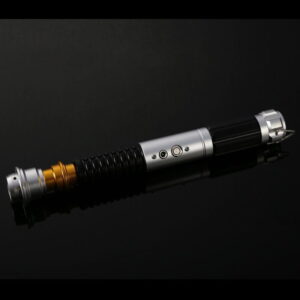
ISABER Double Bladed Lightsaber — RGB Baselit / Xenopixel Staff Saber
Accessories / RGB & Baselit Lightsabers