
Star Wars costumes sort into five families, and the family decides what the build actually costs you: fabric and layers for robes, fit and heat for armour, tailoring for uniforms, thrift and weathering for scavenger looks, and a single hard part for masks and helmets.
Most first builds fail for a reason that has nothing to do with skill. People pick a character they like, then discover the costume needs a technique they have never tried.
So this page sorts by what the work is, not by which film the character comes from. Each family gets the same three questions: what carries it, which piece breaks it, and how much of it you can buy instead of make.
If you already know the character you want, jump to the family in the list below and read the failure mode first. That is the part that decides whether a build finishes.
What’s on This Page
- The Short Answer: Five Families, Four Kinds of Work
- The Robe Family: Fabric and Layers
- The Armour Family: Fit and Heat
- The Uniform Family: Tailoring and Insignia
- The Scavenger Family: Thrift and Weathering
- The Mask Family: One Hard Part
- Which Family Fits You
- Where the Weapon Fits
- FAQ
The Short Answer: Five Families, Four Kinds of Work
Almost every Star Wars costume is fabric, armour, tailoring, or a single sculpted part. The five families below map those four kinds of work onto the characters people actually build, and the cheapest entry point sits at the fabric end.
Fabric builds need a sewing machine and patience with drape. Armour builds need a heat gun, a cutting mat, and a way to breathe inside a sealed shell.
Tailoring sits between them, because a uniform has to fit properly before any detail matters. Mask builds are the opposite: one part carries the whole costume, and everything else is support.
| Family | Examples | Main skill | Hardest part | Beginner fit |
|---|---|---|---|---|
| Robe | Jedi, Sith, Luke, Obi-Wan | Sewing and fabric weight | Getting six layers instead of one | Good |
| Armour | Stormtrooper, Mandalorian, clone | Forming and fitting rigid parts | Range of motion inside the shell | Poor to fair |
| Uniform | Imperial officer, Rebel pilot | Tailoring and insignia placement | Fit, because nothing hides a bad fit | Fair |
| Scavenger | Rey, Han, Jyn, Luke on Tatooine | Sourcing and weathering | Looking worn instead of new | Best |
| Mask | Vader, Kylo Ren, Maul | Buying or sculpting one part | Everything else supporting it | Poor |
The table is a difficulty map, not a ranking. A well-made armour build beats a rushed robe every time, and it costs four times as much to get there.
The Robe Family: Fabric and Layers
Robed characters are the most forgiving family to build and the most common to build badly, because the outfit is six layers and most costumes ship with one.
The layers are an inner tunic, an outer tunic, tabards, an obi, a belt, and the hooded robe. We counted each one and gave the fabric weights in our full breakdown of Jedi robes, so this page will not repeat it.
What matters here is why the family is beginner friendly. There are no rigid parts, no cast pieces, and no size-critical measurements beyond the shoulder width.
The failure mode is material: a robe cut from shiny polyester reflects a hard point of light under convention lighting, and the eye reads that as plastic from across a room.
Weight matters as much as fibre, because fabric under about 280 GSM hangs like a curtain and the hem flutters instead of falling, which is the clearest tell in photographs.
Sith versions of the same family are easier still, because black hides seams. Vader is the exception, since he is a mask build wearing a robe.
The Armour Family: Fit and Heat
Armour is the family where a costume either moves or does not, and a complete stormtrooper suit runs about 16 to 18 major rigid pieces before any soft parts are counted.
The pieces are helmet, chest, back, abdomen, kidney, posterior, two shoulder bells, two biceps, two forearms, two thighs, two shins, and the belt assembly with its thermal detonator.
Each piece has to overlap its neighbours without pinching, and that is a fitting problem rather than a fabrication one. Most first-time armour builds fail at the elbows and the knees, where two plates fight each other.
Heat is the second failure, because sealed plastic over a full torso traps everything you produce and a convention hall in summer makes it worse. Builders add fans and vents, and it is still the most common reason a trooper leaves early.
Costume standards for the largest fan groups also constrain the small parts: shoulder straps, hand plates, the number of belt boxes, and the shape of the knee plate. Those are the details that decide whether a build is recognised.
Mandalorian builds sit in the same family with a different problem. The plates are fewer, but they sit on soft fabric, so the harness has to carry them without sagging, and a badly hung chest plate reads immediately.
The Uniform Family: Tailoring and Insignia
Uniform characters are the only family where a sewing machine is essential and armour is optional, because nothing hides a bad fit in a tailored tunic.
An Imperial officer is a tunic, trousers, a cap, a belt, and a rank badge, with code cylinders on the chest. There is no helmet, which means the face and the fit carry the whole impression.
The cut is the hard part, since a tunic that pulls across the chest or hangs past the hip reads as a costume rather than a uniform, and no amount of insignia fixes it.
Insignia placement is the second trap, because rank badges, cylinders and belt boxes all sit at specific heights relative to each other, and costume standards list those positions for a reason.
Rebel pilots are the mixed-media version of the same family: an orange flight suit and harness from fabric, plus a chest box and helmet that are rigid parts. It is a fair first build if you can buy the helmet.
The Scavenger Family: Thrift and Weathering
The scavenger family is the cheapest way into costume building, because most of it comes from ordinary clothing and the work is in the weathering rather than the construction.
Han Solo is the standard recommendation for a first build: a dark vest, a light shirt, dark trousers, and a belt. Four pieces, none of them hard to find, and nothing to fabricate.
Rey on Jakku works the same way with more layers and more wrapping. Jyn Erso does it with a jacket, a scarf, and a blaster holster.
The failure mode is cleanliness: new fabric looks new, a costume that looks new looks rented, and weathering means sanding edges, dulling hardware, and letting the fabric crease.
There is a skill floor even here, because weathering too evenly reads as painted, and real wear collects at the edges and in the folds rather than spreading across the surface.
The Mask Family: One Hard Part
Mask builds invert the usual order, because one sculpted part carries the entire costume and everything else is there to support it.
Vader is the clearest case: helmet, mask, chest box, shoulder armour, cape, and a full black bodysuit. If the helmet is wrong, nothing else rescues the build, and if it is right, the rest can be ordinary.
Kylo Ren sits in the same family with a lower bar, since the helmet is a simpler shape, though the layered cowl and quilted sleeves have to sit correctly or the silhouette goes soft.
Maul is the variation that needs no helmet at all. The hard part becomes paint and prosthetics, which is a different skill with the same property: it either looks right in the first two seconds or it never does.
The risk here is proportional cost, because a single accurate hard part usually costs more than an entire robe build, and there is no cheaper path that still works.
The order matters more than the questions, since a mask build that also needs armour stops at the first box.
Which Family Fits You
Three practical tests separate the families faster than any list of characters: how much time you have, how much you want to spend, and whether you need to move freely in the costume.
| If this is true | Start here | Because |
|---|---|---|
| First build, small budget | Scavenger | Ordinary clothing, weathering only, no fabrication |
| You can sew but not form plastic | Robe | Six layers of cloth, no rigid parts |
| You want a group costume | Armour | Trooper kits are made to be assembled in numbers |
| You want a formal look | Uniform | Tailoring plus insignia, no helmet to carry |
| You want maximum recognition | Mask | One silhouette does the work, at the highest cost |
| You plan to duel or perform | Robe | Armour and masks both limit vision and movement |
Two of these tests contradict each other more often than people expect. The most recognisable costumes are the least comfortable, and the most comfortable ones are the least recognisable.
If you want both, the usual answer is a scavenger build with one strong accessory, and the accessory is almost always the weapon.
Where the Weapon Fits
Every family above ends at the same place: a hilt on the belt or in the hand is what turns a costume into a character, and it is the one part you can buy instead of build.
This is also the part where a costume budget is easiest to get right, because a colour-cycling hilt covers several characters across several families.
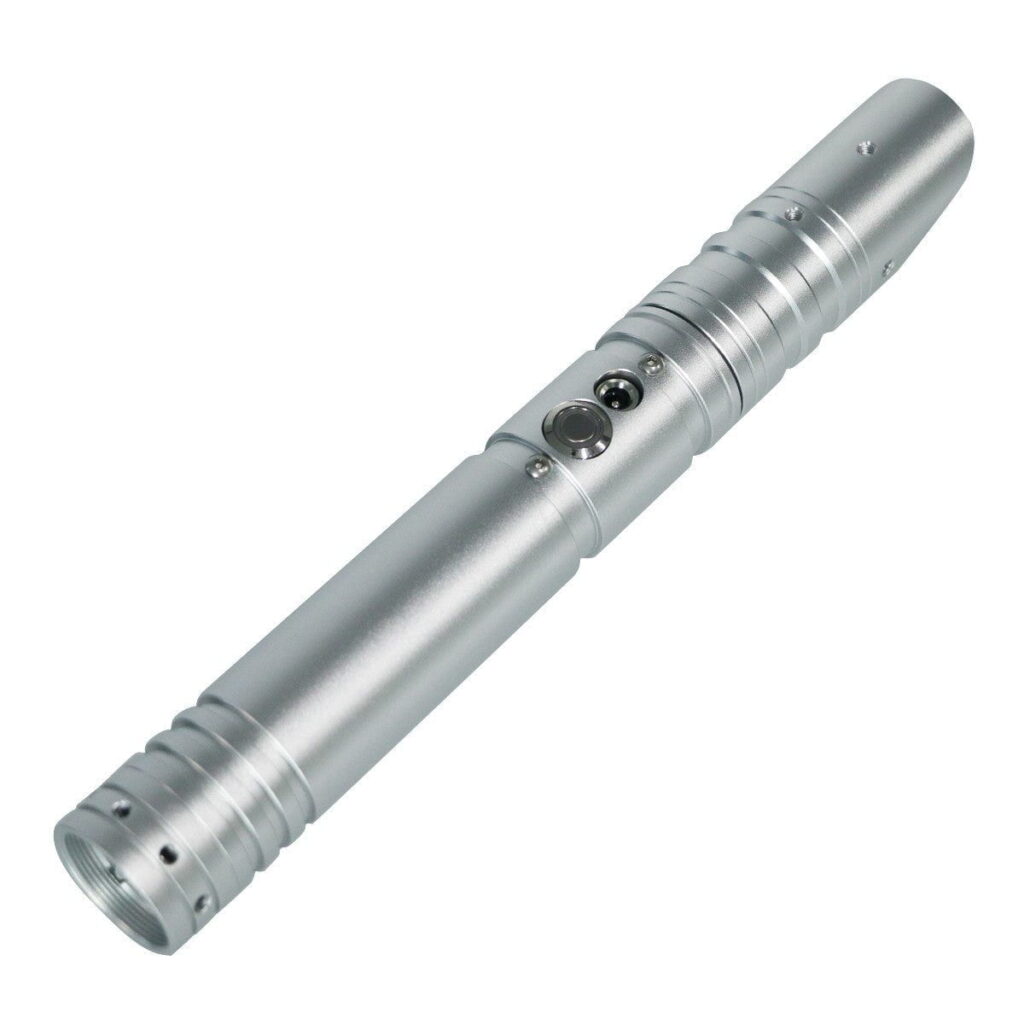
A generic hilt is the practical choice for a first costume, because a character-specific one locks the outfit to a single look. Ours run a colour-cycling board, so the blade colour can change with the costume.
For building it into a costume rather than holding it, our guide to which saber belongs to which character covers the pairing side, and it is the page we would read next.
Luke’s black Return of the Jedi outfit
What a trooper costume costs
Costume pairings by occasion
Getting a saber through a convention
FAQ
Q1: What is the easiest Star Wars costume to make?
A: Han Solo, and it is not close, because a dark vest, a light shirt, dark trousers and a belt are ordinary clothing, so the only work is weathering.
Q2: How many pieces are in a stormtrooper costume?
A: About 16 to 18 major rigid pieces, from the helmet and chest plate down to the shins, plus the belt assembly and separate soft parts like the gloves and boots.
Q3: Is a Jedi or a stormtrooper easier to build?
A: A Jedi, by a wide margin, because robes are fabric and layers while armour needs forming, fitting and ventilation, and the plates have to overlap without restricting the elbows and knees.
Q4: How much does a Mandalorian costume cost to build?
A: It is one of the more expensive families, because it combines rigid plates with soft parts and a harness. Most of the cost sits in the plates and the helmet rather than the fabric.
Q5: Can you wear armour all day at a convention?
A: Most people cannot, and heat is the reason rather than weight. Sealed plastic over a full torso traps body heat, so armour builds usually include fans and planned breaks.
Q6: What makes a cheap Star Wars costume look cheap?
A: Shiny fabric and a new-looking finish, because polyester reflects a hard highlight under convention lights and a costume that has never been weathered reads as rented rather than worn.
Q7: Do all Star Wars costumes need a lightsaber?
A: No, but a hilt is what turns a costume into a character in photographs. Troopers, pilots and officers do not carry one, so it is a choice rather than a requirement.
Q8: What is the hardest Star Wars costume to build?
A: Darth Vader, because he combines a mask build, armour, a cape and a bodysuit. The helmet alone has to be right before the rest of the costume matters at all.
Q9: Can I mix pieces from different Star Wars costumes?
A: Usually not on purpose, because each family has its own materials and hardware, and a robe belt on an armour build reads wrong for reasons of proportion and texture.
Q10: Which costume family is best for a group?
A: Armour, because trooper kits are designed to be assembled in numbers and the pieces are interchangeable between builders. Robes are easier but harder to make look uniform as a group.
Conclusion
Five families, four kinds of work, and one rule that holds across all of them: the failure mode matters more than the character you like.
Pick the family whose failure you can actually solve, then pick the character inside it. A finished scavenger build beats an abandoned trooper every time.
And budget for the weapon before the third fabric purchase, because it is the piece that photographs and the one you will keep when the costume changes.
ISABER Double Bladed Lightsaber — RGB Baselit / Xenopixel Staff Saber
Accessories / RGB & Baselit Lightsabers