Ben Solo Lightsaber — RGB Baselit, Xenopixel & Proffie Replica | ISABERS
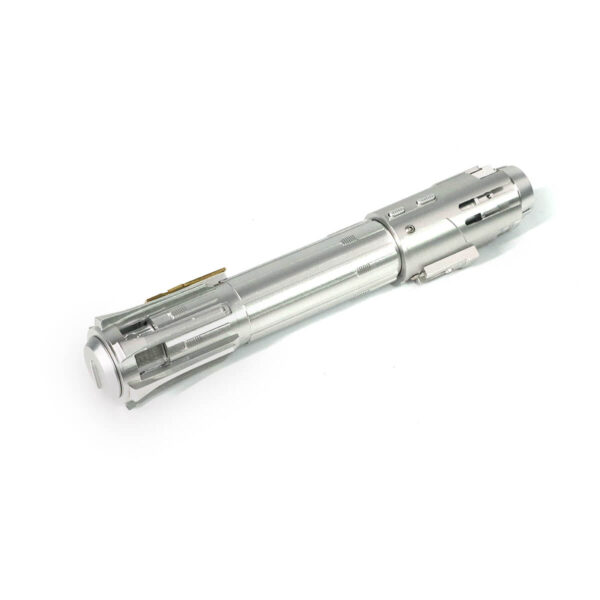
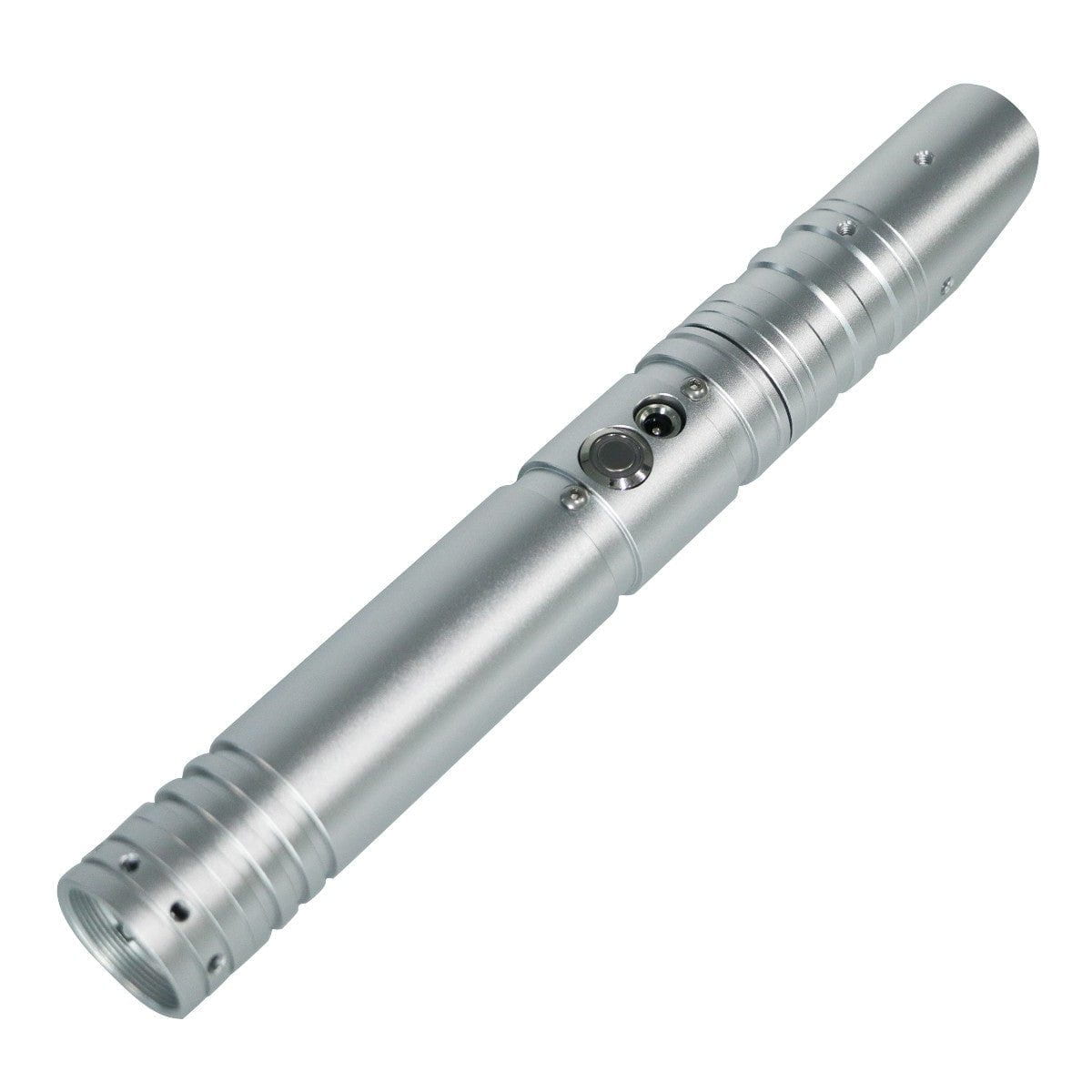
The ISABERS Ben Solo Lightsaber is a replica of the Jedi weapon Ben Solo carried before his fall to the dark side — the blue-bladed saber of a Skywalker heir who never got to finish his training. A sleek silver aluminum hilt with a single emitter, traditional Jedi proportions, and the clean lines of a saber built in the Temple workshops under Luke Skywalker’s instruction. Available in three electronics tiers: RGB Baselit at $199 (from $259), Xenopixel at $289 (from $369), and Proffie for full code-level control.
This is a single-blade saber through and through — no crossguard, no staff coupler, no gimmicks. Just the classic Jedi form factor in a character-accurate hilt. The Xenopixel version with a blue blade and scrolling ignition looks exactly like the weapon that should have been — the lightsaber Ben Solo would have wielded if he’d stayed in the light. For collectors who want the story’s “what if” rather than its tragedy, this is the hilt.
ISABERS is an independent sabersmith, not associated with Lucasfilm or Disney. All versions include Bluetooth app control, smooth swing, SD-card expandable sound fonts, and a 36-inch polycarbonate blade. Free worldwide shipping on orders over $75. Ships within 1-3 business days.
Ben Solo vs Kylo Ren — Two Sabers, One Story
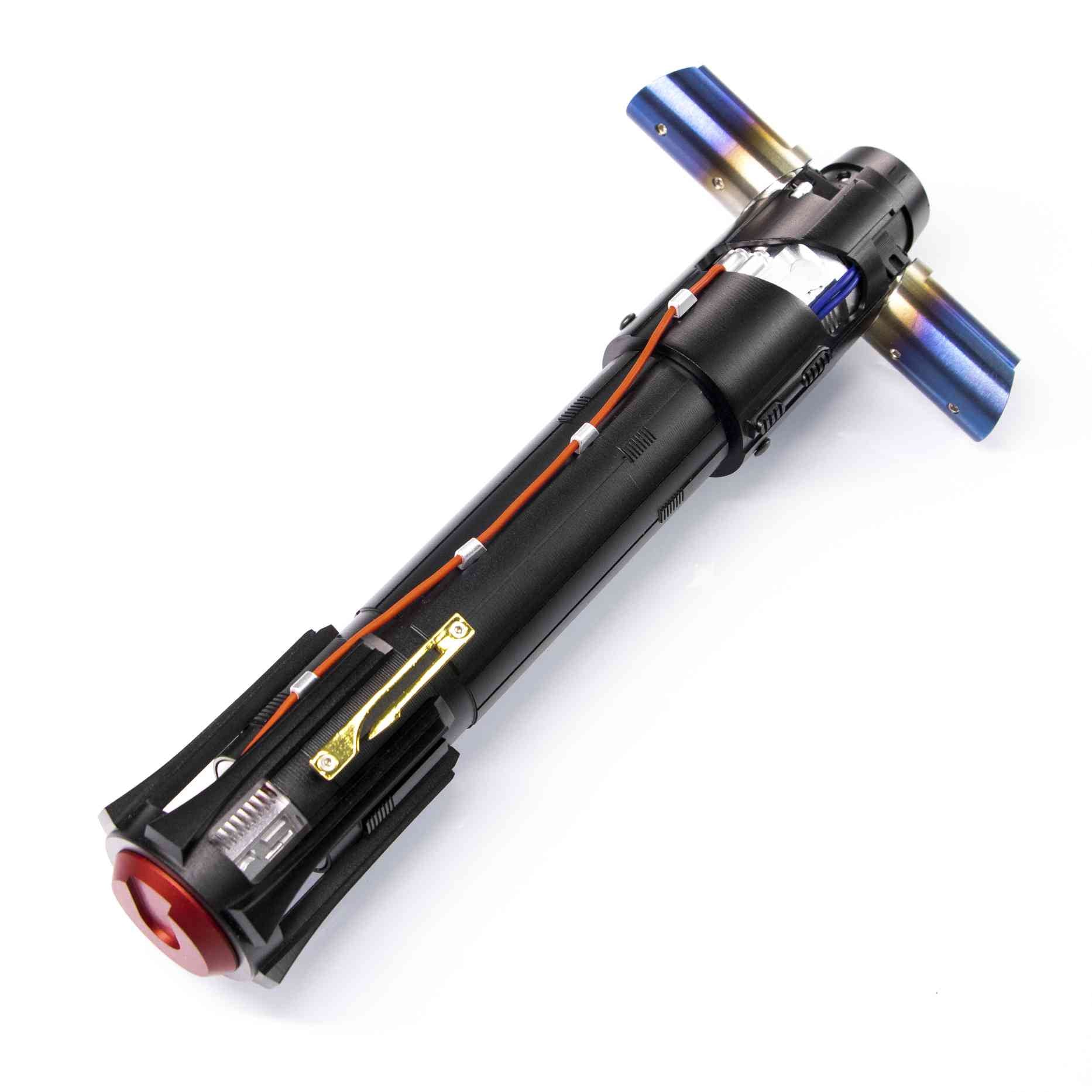
Ben Solo’s lightsaber and Kylo Ren’s crossguard saber are the same weapon at two different points in its life. Ben built this saber as a Jedi apprentice. Clean lines. Silver finish. Intact blue kyber crystal. After the destruction of Luke’s temple and Ben’s fall, he performed the Sith “bleeding” ritual on the crystal — pouring rage into it until it cracked. The cracked crystal produced unstable, unregulated energy, so he retrofitted crossguard vents to release the excess and painted the hilt black. The elegant Jedi weapon became the brutalist crossguard saber.
When you hold the Ben Solo hilt, you’re holding the weapon as it was before everything went wrong — the path not taken. The blue blade, the clean ignition, the stable hum. It’s the saber of a gifted Jedi apprentice who had the potential to be one of the greatest of his generation. If you also own the Kylo Ren crossguard, placing them side by side tells the entire sequel trilogy arc in two hilts.
What Are the Specifications?
| Specification | RGB & Baselit | Xenopixel | Proffie |
|---|---|---|---|
| Price (Sale / Regular) | $199 / $259 | $289 / $369 | Contact ISABERS |
| Blade Type | 2mm polycarbonate, duel-grade | 3mm polycarbonate Neo, duel-grade | 3mm polycarbonate Neo, duel-grade |
| Blade Length | 36 inches (92 cm) | 36 inches (92 cm) | 36 inches (92 cm) |
| Blade Diameter | 1 inch | 1 inch | 1 inch |
| Light Source | 12W RGB LED (in-hilt) | 50W Neopixel LED strip | 50W Neopixel LED strip |
| Battery | 18650 3000mAh 3.7V | 18650 3600mAh 3.7V | 18650 3600mAh 3.7V |
| Charging | USB (charger included) | USB (charger included) | USB (charger included) |
| Sound Fonts | 30+ pre-installed, SD expandable | 30+ pre-installed, SD expandable | 20+ pre-installed, SD expandable |
| Blade Styles | Stable, unstable, pulse | Rainbow, candy, fire, unstable, cracked, + ~10 ignition styles | Fully programmable (Arduino IDE) |
| Smooth Swing | Yes | Yes | Yes |
| Gesture Control | Yes | Yes | No (SD card / USB config) |
| Bluetooth App | Yes | Yes (XenoConfigurator) | No |
| Flash on Clash | Yes | Yes | Yes |
| Blaster Block | Yes | Yes | Yes |
| Hilt Material | Solid aluminum | Solid aluminum | Solid aluminum |
| Hilt Color | Silver | Silver | Silver |
| Removable Blade | Yes | Yes | Yes |
| Dueling Capability | Yes — heavy dueling | Light-to-moderate sparring | Light-to-moderate sparring |
Soundboard Options — Which Tier Is Right for You?
RGB Baselit ($199 sale / $259 regular) — The Dueling Choice
The 12W RGB LED lives inside the hilt. The blade is a hollow polycarbonate tube — no electronics inside, nothing to break on impact. 30+ sound fonts on the SD card, Bluetooth app for color and sound changes, gesture control for ignition and effects. The whole blade lights up at once (no scrolling ignition — the LED is in the hilt, so light fills the tube uniformly). But it handles full-contact sparring that would destroy a neopixel blade. This is the version for duelists who want a character-accurate Ben Solo hilt they can actually fight with. The silver aluminum finish holds up well to grip wear — better than painted hilts.
Xenopixel ($289 sale / $369 regular) — The Visual Showpiece
The 50W Neopixel LED strip spans the full 36-inch blade length. Scrolling ignition — the blue light travels from hilt to tip, exactly like the films. The blade supports rainbow, candy, fire, unstable, and cracked styles plus about 10 ignition animations. The XenoConfigurator Bluetooth app lets you switch colors, sound fonts, and blade effects from your phone. 30+ pre-installed sound fonts with smooth swing. The blue blade on this hilt is what makes the Xenopixel worth the upgrade — a clean, stable Jedi blue rendered across 144 LEDs per meter, scrolling to life with a smooth ignition that the baselit version simply can’t do. Light-to-moderate sparring only. For cosplay, conventions, flow arts, and display, this is the definitive version.
Proffie — Full Creative Control
Same 50W Neopixel hardware as Xenopixel, but with a Proffie soundboard — widely considered the best programmable saber board on the market. No Bluetooth. No gesture control. Instead, you define everything in Arduino IDE: the exact shade of Jedi blue (RGB values down to the integer), the ignition timing (milliseconds per LED), the sound font interactions. 20+ fonts pre-installed, SD expandable. Same sparring limitation as Xenopixel. If you’ve written Arduino code before and want pixel-level control over every aspect of the saber’s behavior, Proffie is the destination. If you’ve never touched an IDE, the Xenopixel version will make you happier with zero learning curve.
What’s in the Box?
- Saber hilt ×1 with installed soundboard and battery
- 36-inch polycarbonate blade ×1 (2mm for RGB, 3mm for Xenopixel/Proffie)
- USB charger ×1
- Hex wrench and screw set ×1
Design & Handling — The Jedi Form Factor
A Traditional Single-Blade Hilt
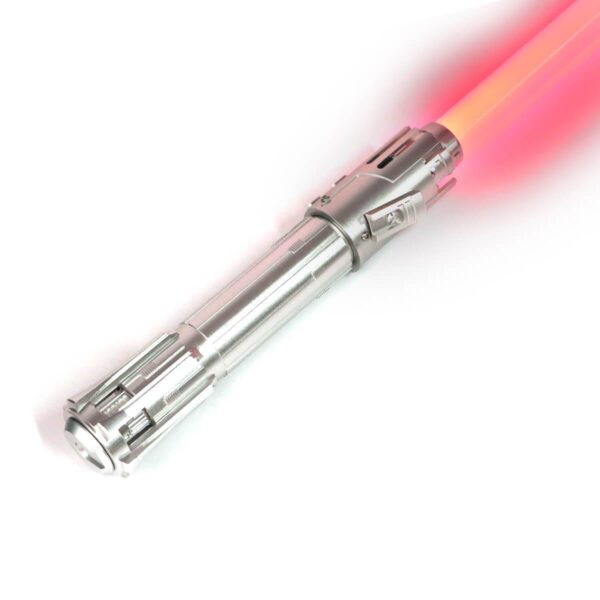
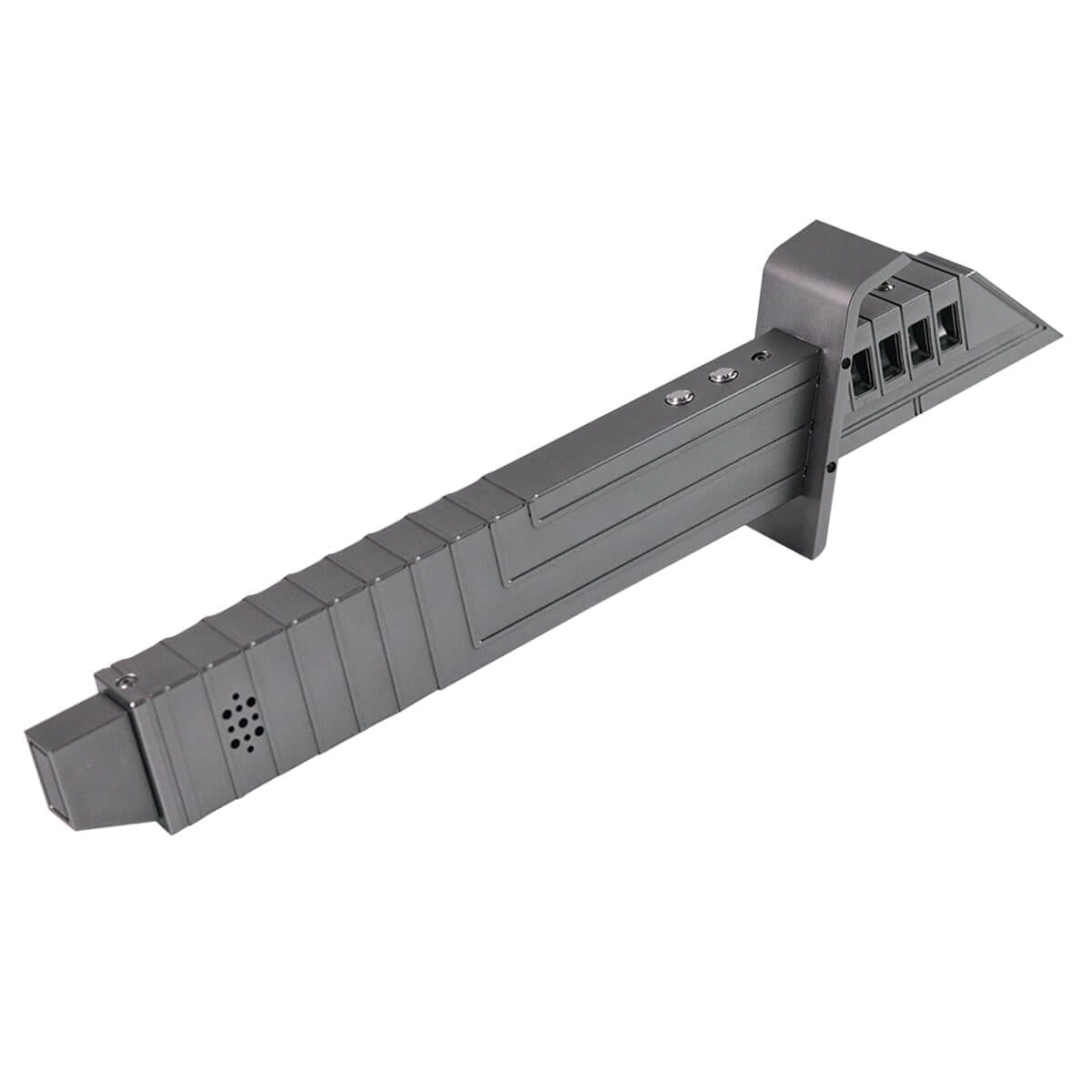
The Ben Solo hilt follows classic Jedi proportions. The emitter has grooved windows — a design element that carries through to his later Kylo Ren hilt. The grip section is clean and ergonomic, balanced for single-handed or two-handed use. The pommel is weighted to counterbalance the blade, so the saber’s center of gravity sits naturally in your dominant hand. At roughly 11–12 inches of hilt length with a 36-inch blade, the proportions are standard for a Jedi saber — neither unusually long nor unusually short. Two-handed wielding is comfortable without feeling cramped.
Unlike the Kylo Ren crossguard, there are no side emitters to catch on clothing, no exposed wiring to snag, no vents to accidentally cover with your hand. It’s a clean cylinder. This makes it the more practical choice for spinning and flow arts — nothing interferes with your grip transitions.
The Jedi Blue Blade
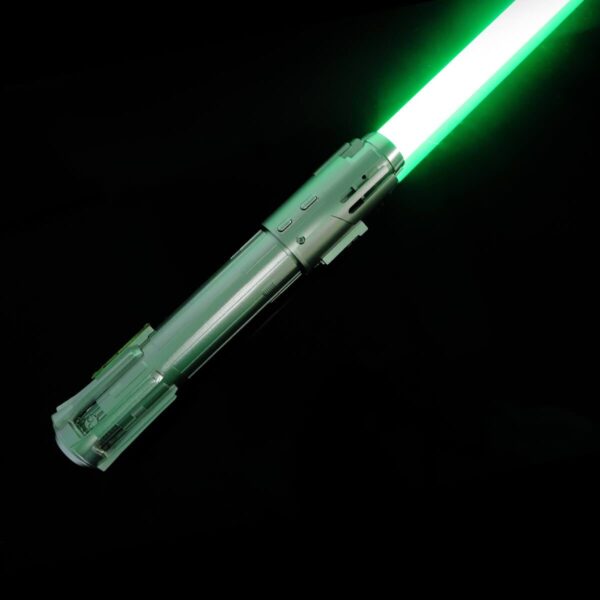
Ben Solo’s kyber crystal was blue — the color of a Jedi Guardian, those who focus on combat and physical defense of the Order. On the RGB baselit, you pick blue from the app and get a solid, bright blue blade with uniform illumination. On the Xenopixel, the neopixel strip renders blue with subtle gradients — slightly brighter at the hilt, fading toward the tip in a way that mimics the on-screen look. The scrolling ignition on Xenopixel is the main reason to upgrade: the light climbs the blade like water filling a glass, taking about half a second from hilt to tip. It’s the single most satisfying effect a saber can produce, and it never gets old.
All three versions can produce any color — the saber isn’t locked to blue. Switch to green for a Luke-style look, purple for Mace Windu vibes, or whatever color you want. But the silver hilt with a blue blade is the canonical Ben Solo configuration, and it’s what most owners run.
Weight and Balance
The solid aluminum hilt with a single 18650 battery weighs about 1.5 pounds with the blade installed. The balance point sits roughly 3–4 inches above the emitter — slightly blade-heavy, which is intentional. A blade-biased balance makes spins feel more natural because the tip wants to keep moving in the direction you throw it. The grip is comfortable for extended handling; the grooved sections provide tactile feedback without being abrasive. For two-handed use, the lower hand naturally finds the smooth section above the pommel.
Frequently Asked Questions About the Ben Solo Lightsaber
Q1: How is this different from the Kylo Ren crossguard saber?
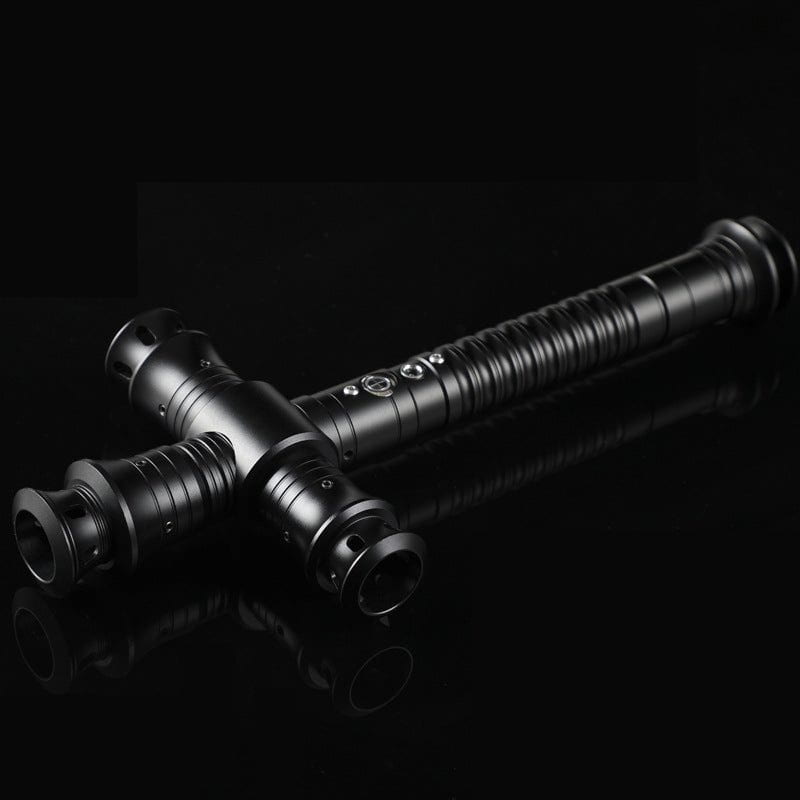
A: They’re the same hilt at different points in the story. Ben Solo’s saber is the original Jedi version: silver, clean lines, single emitter, intact blue crystal, stable blade. Kylo Ren’s crossguard is the same hilt after modification: painted black, retrofitted with side vents to handle the cracked red crystal, producing the unstable crackling blade. The Ben Solo hilt is lighter, simpler to handle, and better for spinning and flow arts — no side emitters to work around. If you want the elegant Jedi look with a stable blue blade, get the Ben Solo. If you want the aggressive dark-side aesthetic with the flame-blade effect, get the Kylo Ren crossguard. Collectors often buy both to display side by side.
Q2: Which version is best for cosplay and conventions?
A: The Xenopixel. The scrolling blue ignition and the neopixel blade’s brightness make it the clear choice for photos and video. Convention halls are well-lit, and a baselit blade can look washed out under show lighting — the neopixel’s higher brightness and per-pixel control hold up much better. The Bluetooth app also means you can adjust blade color and sound on the spot without opening the hilt or removing the SD card. If someone asks “can you make it green?”, you pull out your phone and do it in 10 seconds. That’s a better convention experience than fumbling with an SD card reader.
Q3: Can I duel with the Xenopixel version?
A: Light sparring, yes. Full-contact dueling, no. The LED strip inside the blade can fracture under heavy impact — individual solder joints crack, and sections of the blade go dark. The 3mm polycarbonate wall provides decent impact absorption, but it’s not rated for the kind of force you’d use in competitive dueling. If dueling is your primary use case, get the RGB Baselit version — the LED is in the hilt, and the blade is just a hollow tube that takes the impact without consequence. If you want the visual effects of Xenopixel and still do some light sparring, keep the hits below about 50% power and avoid edge-on-edge strikes. The blade will last.
Q4: What’s the battery life like?
A: RGB Baselit: the 3000mAh 18650 gives about 4–5 hours of continuous blade-on time at full brightness. Xenopixel/Proffie: the 3600mAh 18650 gives about 2–3 hours at full white, longer on blue (blue LEDs are more efficient). In practice, you’re not running the blade continuously — you ignite, spin, turn off, repeat. A full day at a convention with intermittent use is fine on a single charge. For overnight events, bring a power bank and charge via USB during downtime. The battery is a standard 18650 — if you already have spares from other sabers or vape gear, they’re interchangeable as long as they’re button-top protected cells.
Q5: Does the Ben Solo lightsaber come with a stand or case?
A: No stand or carrying case is included in the standard package. The box contains the hilt, blade, charger, and hex tool set. Display stands and wall mounts are available separately from ISABERS. The hilt’s silver aluminum finish doesn’t need a case for protection — it won’t scratch easily — but if you’re traveling to conventions, a padded saber bag is a worthwhile addition.
Q6: What is the difference between Xenopixel and Proffie?
A: Xenopixel is designed for ease of use: Bluetooth app, gesture controls, everything configurable from your phone. Proffie is designed for depth: no app, no gesture control, everything configured by writing code in Arduino IDE and flashing the board via USB. Proffie gives you finer control — exact RGB values, exact ignition timing, exact sound mixing behavior — but requires programming knowledge. Xenopixel gives you 90% of the effects with zero coding. If you want to open the box, charge the battery, and start swinging, get Xenopixel. If you want to spend an evening tweaking every parameter until the saber behaves exactly the way you imagine, get Proffie.
Pricing & Availability
| Variant | Sale Price | Regular Price |
|---|---|---|
| RGB & Baselit | $199 | $259 |
| Xenopixel | $289 | $369 |
| Proffie | Contact ISABERS for pricing | |
All prices include tax. Free worldwide shipping on orders over $75. Orders ship within 1-3 business days. Easy returns with no restocking fees on eligible returns. Contact ISABERS for current stock status and Proffie board availability.
Reviews
There are no reviews yet.