
Lightsaber chopsticks are a pair of plastic eating sticks with an LED in each one, and the honest verdict from buyers is that they are a good gift and a mediocre pair of chopsticks, because the light works and the grip often does not.
That is not a reason to avoid them, since it is a reason to check one thing before you buy and to know which jobs they handle well and which they do not.
We went through the review record on the main versions people actually buy, because the differences between a good pair and a bad pair are not visible in a product photo.
This page covers what a pair is, why the tips matter more than the light, what goes wrong with the battery and the switch, and what to look for if you are buying these as a present.
What’s on This Page
- The Short Answer: A Gift, Not an Utensil
- What a Pair Actually Is
- The Tip Problem
- Battery, Switch, and Water
- What Changed in Later Versions
- The Two Kinds of Buyer
- What to Check Before You Buy
- If You Want the Real Thing
- FAQ
The Short Answer: A Gift, Not an Utensil
A pair of lightsaber chopsticks is a novelty object with a working light and a slippery eating surface, and reviewers consistently describe it as fun for a themed dinner and poor as a daily replacement for real chopsticks.
The light is the part that delivers, because buyers report a bright, even glow that looks good in a dim room, which is exactly the setting these are sold for.
The grip is the part that disappoints, since the plastic on the first generation was smooth enough that food slid out of the pinch, and the size and weight are both above what a normal pair feels like in the hand.
So the product works as a gift, a stocking filler, or a prop for a themed meal, and it works much less well as the pair you use every night.
| What you want it for | Does it work | Why |
|---|---|---|
| Themed dinner or party | Yes | The light is the point and it is bright |
| Gift for a fan | Yes | Cheap, recognisable, and it lights up |
| Sushi in a dim room | Partly | Depends entirely on whether the tips are textured |
| Everyday meals | No | Bulkier than normal chopsticks and hand wash only |
| Children eating unsupervised | No | Button cells sit in a compartment that can slide open |
Read the last two rows first if you are buying for someone else, because they decide whether this is a good present or a bad one.
What a Pair Actually Is
A pair is two plastic sticks shaped like lightsaber blades, each one carrying a small battery and an LED, with the switch usually at the top end and the light running down the length of the stick.
Most sets offer several colour modes, and the better ones let you hold a colour rather than cycling through them, which matters at a table where nobody wants a stick that changes colour every few seconds.
The batteries are the small button type, and they sit under a cover at the thick end. That detail is worth knowing before you hand a pair to a child, because a cover that slides is a real hazard and a cover with a screw is not.
Construction quality varies more than the photos suggest, because reviewers mention individual sticks arriving dead, and a switch that fails within a day is common enough to count as a known risk rather than a rare fault.
The Tip Problem
The eating end is the part that decides whether these are usable, and a smooth plastic tip will lose grip on food in the pinch no matter how bright the light is.
Chopsticks work by friction and angle, and a textured tip grabs while a polished one slides, so the difference shows up immediately with anything wet or heavy, which in a sushi setting is most of the plate.
The second issue is size, because these are longer and thicker than a normal pair, so the leverage is different and the hand has to work harder to keep the tips together, which makes a slippery tip worse than it would be on a slimmer stick.
This is the whole buying decision in one picture, and it is the one thing a product photo will not show you.
Battery, Switch, and Water
The electronics are simple enough to last but not sealed, so water in the battery compartment and a switch that sits proud of the body are the two ways a pair stops working.
Water is the first risk, since these are hand wash only and washing them like normal chopsticks pushes water into the compartment where it shorts the switch, so the habit of running them under the tap is what kills them.
The switch is the second, because a stick that can be turned on by a bump in a drawer will drain itself, which is why pulling the battery tab back into place between uses is worth the two seconds.
The cover is the third, and it is a safety point rather than a reliability one. A slide cover that opens under finger pressure is not suitable for a child to use unsupervised, while a screwed cover is.
What Changed in Later Versions
Later production runs fixed the two loudest complaints, with textured tips that actually grip and battery covers that take a screw, so the version matters as much as the design.
That makes these a category where the same product photo can hide two very different objects. An older pair and a newer pair look alike on a listing page and behave nothing alike at a table.
The practical answer is to buy from a listing that mentions a textured or frosted tip and a secured battery door, and to treat the absence of either as a sign you are looking at old stock.
It is also why the review scores for these sit all over the place. Two buyers describing the same product can be describing two different production runs.
The Two Kinds of Buyer
There are two people who buy these, and they want different things: the gift buyer who wants a cheap object that produces a moment, and the fan who wants a usable set for themed dinners.
The gift buyer is well served, because these are inexpensive, they look like the thing they are imitating, and the light does its job the first time the recipient presses the button.
The fan is served only if they check the tip. A textured pair will hold a piece of sushi, and that is the difference between a novelty that gets used and a novelty that goes in a drawer.
Anyone buying for a child should check the battery cover first, because a slide cover and a small button cell is a combination worth avoiding regardless of how good the light looks.
What to Check Before You Buy
Five things separate a pair worth buying from a pair that disappoints, and only two of them appear in the marketing copy.
- Tip surface: textured or frosted rather than polished, because this is the whole decision.
- Battery cover: screwed rather than sliding, which is also the child-safety point.
- Colour control: a mode you can hold, rather than only a cycle you chase.
- Wash instructions: hand wash only, stated clearly instead of left implied.
- Spare cells: button cells in the right size, so a dead pair can be revived.
If a listing answers all five, it is a reasonable buy. If it answers two, you are buying a novelty and should expect novelty performance.
| Signal | Good sign | Warning sign |
|---|---|---|
| Tip | Frosted or textured | Polished, or no mention at all |
| Battery door | Screw fitting | Slide cover |
| Cleaning | Hand wash stated | Dishwasher safe claimed |
| Colour | Hold a single colour | Cycle only |
None of this is expensive to check, and all of it is cheaper than buying twice.
If You Want the Real Thing
Chopsticks are the small version of an idea that has a full-size version, and the difference between the two is the same difference between a light and a blade.
A real saber is built around a board that senses motion and drives the blade in response, which is what makes it feel like a weapon rather than a light. Ours run colour-cycling electronics in a metal hilt, and the blade is polycarbonate rather than a moulded plastic stick.
We are not going to pretend the two are related products. One is a table novelty and the other is a prop you swing, and the only thing they share is a shape.
But if you are buying these as a gift for someone who already owns a saber, the more useful version of the same present is often a stand or a case, and our page on gifts for people who already own the obvious things covers that ground.
For the engineering behind a full-size blade, our neopixel buying guide explains what the numbers on the box actually mean.
The six numbers to check before you buy
Displaying a saber properly
Building a saber from parts
Pairing a hilt with a costume
FAQ
Q1: Do lightsaber chopsticks actually work?
A: They work as a novelty and only partly as an eating tool, because the light is reliable while the grip depends on whether the tips are textured, and smooth tips let food slide out.
Q2: Why do food slide off lightsaber chopsticks?
A: The first versions had polished plastic tips with almost no friction, and the extra length and weight of the stick make a slippery tip harder to control than it would be on a normal pair.
Q3: Are newer lightsaber chopsticks better?
A: Yes, later runs added frosted or textured tips that grip food and battery covers that take a screw, so the production version matters as much as the design does.
Q4: Can you wash lightsaber chopsticks in a dishwasher?
A: No. They are hand wash only, because water gets into the battery compartment and shorts the switch, and the habit of rinsing them under a tap is the usual cause of failure.
Q5: What batteries do lightsaber chopsticks use?
A: Small button cells that sit under a cover at the thick end, and the cover is the part to check, because a sliding cover is a hazard around children while a screwed one is not.
Q6: Why do the lights turn on by themselves?
A: The switch sits proud of the body and can be pressed by a bump in a bag or a drawer, which drains the cells, so the battery tab is worth pulling back into place between uses.
Q7: Are lightsaber chopsticks a good gift?
A: Yes, for a fan who will use them once at a themed dinner, because they are cheap and the light is genuinely bright, and they are a weaker gift for someone who wants to use them regularly.
Q8: Do they come in different colours?
A: Most sets offer several colour modes, and the better ones let you hold one colour rather than cycling through, which matters at a table where nobody wants a stick that keeps changing.
Q9: Are they safe for children?
A: Only with supervision if the battery cover slides, because button cells are a real hazard when a compartment opens under finger pressure, so check for a screwed cover before buying for a child.
Q10: What is the alternative for a Star Wars fan who cooks?
A: Look for normal chopsticks in a themed finish, and put the money toward a full-size saber or a display stand instead, since those are the pieces a collector actually keeps using.
Conclusion
A novelty with a working light and a grip problem, which later versions fixed and older stock still has, and that is the whole product in one sentence.
Check the tip and the battery door before you buy, and buy with the right job in mind, because these are a gift rather than a utensil and they are honest about it.
If the person you are buying for is past that stage, a saber they can actually swing is the present that survives the year, and our guide to Star Wars gifts is where we would start.
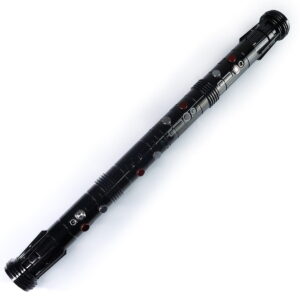
ISABER Double Bladed Lightsaber — RGB Baselit / Xenopixel Staff Saber
Accessories / RGB & Baselit Lightsabers
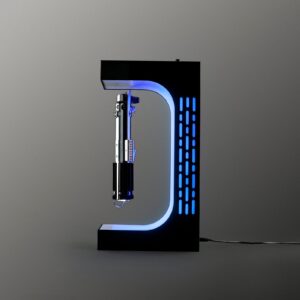
ISABER Magnetic Levitation Lightsaber Display Stand
Electromagnetic display stand that suspends your saber hilt in mid-air with a smooth 360-degree rotation - no cradle, no visible support.