Cal Kestis is the only Jedi on screen whose lightsaber is defined by its destruction — the broken Jaro Tapal blade he carried through the first half of Fallen Order became the most recognizable hilt in the modern games, and its reforging on Ilum turned one damaged relic into four fighting forms.
Cal’s story runs through three distinct sabers: a lost padawan blade, his master’s broken double-blade, and the Ilum-reforged weapon that can split into twin sabers, extend into a double blade, or mount a crossguard stance. No other Jedi’s saber evolves this way on screen.
That broken hilt became the first video game lightsaber voted by fans into Dok-Ondar’s Den of Antiquities at Galaxy’s Edge — a real-world honor no other game saber has matched.
This page is a timeline reference: the full history of Cal Kestis’s sabers, the engineering that makes the multi-form blade possible, and how replicas reproduce each version.
What’s on This Page
- The Padawan Saber — the lost blue blade of a youngling
- The Broken Jaro Tapal Saber — an icon born from damage
- The Ilum Saber — the multi-form weapon Cal built himself
- The Crossguard Form — the Survivor stance that added vent blades
- The Engineering of a Multi-Form Blade
- Cal at Galaxy’s Edge — the fan-voted Legacy saber
- How Replicas Reproduce Cal’s Sabers
- Frequently Asked Questions
The Padawan Saber
Cal’s first lightsaber was a standard single-bladed blue saber, built as a padawan under Master Jaro Tapal — and it was knocked away and lost during the Order 66 firefight while Cal tried to deflect blaster bolts.
The saber was built during the Gathering on Ilum, the traditional rite where padawans find their kyber crystal and construct their first blade. Cal’s padawan saber was conventional: a single blue blade from a standard crystal, indistinguishable from hundreds of Jedi blades of its era.
It was never recovered. During the Purge, clone troopers opened fire on Cal and his master, and the saber was knocked from his grip down a deep shaft. For a young padawan who would spend years in hiding, that loss was the start of everything.
The Broken Jaro Tapal Saber
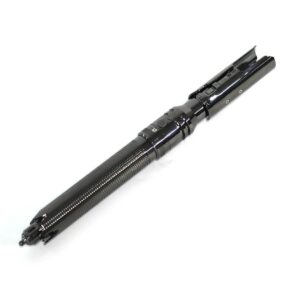
After Jaro Tapal’s death, Cal inherited his master’s double-bladed saber — and a clone’s shot during Order 66 shattered the hilt near the lower emitter, leaving a broken single-blade weapon with a visibly damaged, cracked body that became the most iconic lightsaber in the modern games.
Jaro Tapal’s saber was a large, double-bladed weapon built for a Lasat master — formidable in two-handed combat. The damage came from a clone trooper’s shot that struck near the bottom blade, fracturing the hilt so badly it could only function as a single-bladed saber with a broken, raw-edged profile.
Cal carried this damaged weapon through the first half of Fallen Order. It is, in many ways, the emotional center of the game — a surviving relic of a dead master, imperfect but functional, fought with and finally lost.
Its end came on Dathomir, where a vision of fighting Jaro Tapal led to the saber’s kyber crystal being crushed and the weapon destroyed. But the broken-hilt design had already entered the fandom’s memory.
The Life of Cal’s Sabers, Timeline
Five stages, one weapon’s journey.
Lost on Bracca
Broken on Dathomir
Multi-form weapon
Survivor stance
The broken Tapal blade is the hinge: damage defined Cal’s look, and reforging defined his growth.
The Ilum Saber
With no weapon left, Cal returned to the crystal caves on Ilum and found a rare naturally split twin kyber crystal, fusing it with surviving parts of Jaro Tapal’s hilt and a component from Cere Junda to build an entirely new multi-form lightsaber.
The reforged saber is the centerpiece of Cal’s design. Its defining feature is a pair of naturally split crystals that allow the hilt to separate into two independent single-blade sabers for dual-wielding, or to ignite both ends as a double-bladed staff.
Three heritage streams flow into the build: the fractured Jaro Tapal body, a hilt component from Cere Junda, and the new Ilum crystal. The result reads as both repair and reinvention — a saber assembled from the people who shaped Cal.
This is the exact saber Cal holds when Jedi: Survivor opens, and it supports four fighting styles in one weapon.
The Crossguard Form
In Jedi: Survivor, the crossguard isn’t a separate fourth saber — it’s a new combat form unlocked on Cal’s Ilum saber that adds hilt-mounted vent blades, giving heavier, more ceremonial strikes.
The crossguard stance mounts two short vent blades at the emitter, echoing the High Republic-era crossguard design also used by Kylo Ren. It trades speed for power, favoring deliberate, heavy strikes that feel closer to a battle axe than a rapier.
Survivor lets Cal switch freely between single-blade, dual-wield, double-bladed, and crossguard stances — a gameplay system that mirrors the saber’s actual multi-form engineering.
The Engineering of a Multi-Form Blade
The Ilum saber’s multi-form ability comes from the naturally split twin crystal — a rare kyber formation that lets one hilt house two independently igniting blades from a single crystal source.
In canon, a standard lightsaber houses one kyber crystal per blade. A split twin crystal is the exception: it provides two coherent plasma streams from a single stone, which is what allows the hilt to function as two separate sabers when separated.
- Single-blade mode — the standard configuration, one ignited blade.
- Dual-wield (Jar’Kai) — the hilt splits into two independent sabers, each with its own crystal half.
- Double-bladed (saberstaff) — both emitters ignite, extending into a staff.
- Crossguard stance — vent blades mount at the emitter for heavier strikes.
The split-crystal concept is why Cal’s saber is uniquely reproducible — in replica form, a coupler and twin-blade core let a single hilt deliver the same four modes.
Cal at Galaxy’s Edge
Cal Kestis’s broken saber became the first video game lightsaber voted by fans into Dok-Ondar’s Den of Antiquities at Star Wars: Galaxy’s Edge — the only game hilt displayed in the park’s collection.
The Legacy saber at Galaxy’s Edge reproduces the broken-pommel version of the Tapal blade, complete with the damaged profile that made it famous. It’s a screen-accurate static hilt, sold alongside the park’s other Legacy hilts.
Fan voting put it there. The broken saber’s emotional weight — a survivor’s weapon carried through loss — resonated enough to earn a real-world display slot that no other game saber has claimed.
How Replicas Reproduce Cal’s Sabers
Modern Cal Kestis replicas cover all three saber versions — broken Tapal, Ilum-reforged, and crossguard — across the standard electronics tiers, with the broken-hilt profile and the multi-form coupler as the defining details.
| Replica | Typical Electronics | Accuracy Focus |
|---|---|---|
| Entry | RGB baselit | Broken Tapal hilt, blue blade |
| Mid-range | Xenopixel / SNV4 | Scrolling ignition, twin-saber split |
| Screen-accurate | Proffie | Multi-form coupler, crossguard vent blades |
The multi-form capability is what separates Cal replicas from other character sabers. A Proffie build with a coupler can switch between single, double, and dual-wield the same way the game does — making Cal one of the few characters whose full saber kit is a feature, not just a hilt.
Frequently Asked Questions
Q1: How many lightsabers does Cal Kestis have?
A: Three distinct sabers in canon — the lost padawan blade, Jaro Tapal’s broken double-blade, and the Ilum-reforged multi-form saber that can also mount a crossguard stance. The reforged saber is effectively four weapons in one.
Q2: Why is Cal Kestis’s lightsaber broken?
A: The broken saber is Jaro Tapal’s double-blade, damaged by a clone trooper’s shot during Order 66. The blast hit near the lower emitter and fractured the hilt, leaving it functional only as a single-bladed saber with a visibly broken body. Cal carried it for years.
Q3: What is Cal Kestis’s second lightsaber?
A: The Ilum-reforged saber, built from a naturally split twin kyber crystal, surviving parts of Jaro Tapal’s hilt, and a component from Cere Junda. It can split into two sabers for dual-wielding, ignite both ends as a double blade, or mount a crossguard stance.
Q4: What color is Cal Kestis’s lightsaber?
A: Blue by default — his padawan saber was blue, and the reforged saber ignites blue. In both games, players can recolor the blade to green, orange, purple, yellow, indigo, cyan, or magenta through in-game customization.
Q5: Does Cal Kestis have a crossguard lightsaber?
A: In Jedi: Survivor, yes — as a combat form, not a separate saber. The crossguard stance mounts two vent blades at the emitter of his Ilum saber, echoing the High Republic design and giving heavier, more deliberate strikes.
Q6: Can Cal Kestis’s lightsaber split into two?
A: Yes. The Ilum saber separates into two independent single-blade sabers, each powered by half of the naturally split twin kyber crystal. This enables dual-wielding (Jar’Kai style) in both games.
Q7: What is Cal Kestis’s lightsaber made of?
A: The reforged saber is assembled from three heritage parts — the fractured Jaro Tapal hilt body, a hilt component from Cere Junda, and the new Ilum twin crystal. The broken Tapal blade itself was a large double-bladed hilt built for his Lasat master.
Q8: Is Cal Kestis’s lightsaber at Galaxy’s Edge?
A: Yes — the broken Tapal hilt was voted by fans into Dok-Ondar’s Den of Antiquities at Star Wars: Galaxy’s Edge, the first video game lightsaber displayed in the park. The Legacy version reproduces the broken-pommel design.