
A Neopixel lightsaber is a polycarbonate tube with a strip of addressable LEDs running inside it, and six numbers decide whether the one in front of you is worth the price: the pixel count, the current draw, the cell capacity, the runtime that follows from it, the blade mass, and what a replacement blade costs.
Most listings publish two of those six, and the other four are the ones that decide how the saber behaves after the first week.
This page is a buying checklist rather than a technical archive. The engineering sits on our comparison of Neopixel and baselit hardware, and the three-way version with the budget boards is here.
What follows is what to ask before you spend, and why each number matters once the saber is in your hand.
What’s on This Page
- The Short Answer: Six Numbers
- One: Pixels Per Blade
- Two: Current Draw and the Cell
- Three: Runtime Is Arithmetic
- Four: Blade Mass and Balance
- Five: Blade Length and Tip Speed
- Six: The Blade Is a Consumable
- The Six Numbers Together
- Which Saber This Points At
- FAQ
The Short Answer: Six Numbers
The six numbers are pixel count, current draw, cell capacity, runtime, blade mass and blade replacement cost, and any listing that answers all six is being honest about what the product is.
A Neopixel blade carries a flexible strip of addressable LEDs, with each package holding a red, green and blue die plus its own driver chip. The data line daisy-chains, so one wire controls the entire strip.
Everything else about the saber follows from that one decision: the power draw, the weight at the tip, the failure mode, and the price of the part you will eventually replace.
| # | Number | Typical value | What it decides |
|---|---|---|---|
| 1 | Pixels per blade | 100 to 150 on a 32 inch blade | Brightness ceiling and how smooth the ignition scroll looks |
| 2 | Peak current | Around 50 W at full white | Whether the cell survives, and how hot the blade runs |
| 3 | Cell capacity | 3,200 mAh in a single 18650 | How long any of it lasts, and whether you keep a spare |
| 4 | Runtime | 40 to 60 minutes at full brightness | Whether it is a photo prop or a session tool |
| 5 | Blade mass | 100 to 160 g more than a hollow blade | Balance point and how fast the tip changes direction |
| 6 | Replacement blade | A significant fraction of the hilt price | Whether you treat the blade as a part or as a consumable |
Six numbers is not a lot to ask for, and most of them can be derived from two: the pixel count and the cell capacity.
One: Pixels Per Blade
A 32 inch blade runs 100 to 150 pixels, which works out to roughly 100 to 130 LEDs per metre on most strips and up to 144 per metre on premium builds.
The strip is not the only variable, because the blade holds it inside a foam diffuser that turns individual points of light into a continuous bar.
That diffuser sets a practical ceiling, since above roughly 100 LEDs per metre the eye stops resolving individual pixels, so the extra LEDs mostly buy maximum brightness and smoother colour blending at low levels.
They also add current draw and heat, and a 144 per metre two-strip blade pulls noticeably harder than a single strip at the same brightness setting, so the difference shows up as runtime rather than as visible quality.
What to ask: how many pixels, on how many strips, over what blade length. A seller who cannot answer that is selling a colour, not a specification.
Two: Current Draw and the Cell
At full white the blade is the largest load in the hobby, around 50 W against roughly 12 W for a single in-hilt LED, so the cell has to be a genuine high-drain part.
Each pixel can pull up to about 60 milliamps at full white, and a two-strip blade multiplies that across every pixel at once. Colours that use one channel draw far less than white, which uses all three.
The cell in nearly every saber of this type is a single 18650 rated around 3,200 mAh, feeding a boost converter that lifts 3.7 volts to the 5 volts the strip wants.
Two properties matter beyond capacity. The cell has to be high-drain, because a low-current part sags under load and the board resets mid-swing. And it should be protected, because an unprotected cell in a metal tube is a risk you do not need.
What to ask: which cell, what continuous rating, and whether a spare is included. On a saber that runs less than an hour, the spare is part of the product.
Three: Runtime Is Arithmetic
Runtime is capacity divided by current, so a 3,200 mAh cell at an average draw near 4 amps gives roughly 48 minutes, which matches the 40 to 60 minute band we publish for full brightness.
That arithmetic is worth doing in front of a listing that claims three hours. Three hours from the same cell implies an average draw near 1 amp, which is a dim saber rather than a bright one.
Colour changes the number more than people expect, because white and any mixed colour use all three channels, while a single-channel colour such as red draws a fraction of that and the same cell lasts visibly longer.
The gap between the two bars is what most runtime claims leave out: the brightness setting they were measured at.
What to ask: at what brightness, and with which colour. An honest answer will give a range and name the setting.
Four: Blade Mass and Balance
A pixel blade carries a strip and a foam core that a hollow blade does not, which adds roughly 100 to 160 grams and moves the balance point two to four inches forward.
That mass sits at the far end of the lever, which is why the saber feels slower to redirect rather than simply heavier, even though the hilt itself has not changed.
Total weight for a complete saber usually lands between 540 grams and a kilogram, with the hilt accounting for more of it than people assume, and our weight breakdown has the full table.
The practical consequence is a change in how you handle it. A hollow blade can be flicked from the wrist, while a blade with a strip in it wants the shoulder to lead.
What to ask: the blade weight, and whether the balance point is measured with the blade fitted, since most listings publish neither.
Five: Blade Length and Tip Speed
Blade length multiplies everything above, because mass scales with length, so a 36 inch blade runs about 12 percent heavier than the 32 inch version of the same construction.
The pixels have to match the length as well. A blade configured for 32 inches that you swap onto a 36 inch tube will either leave the tip dark or, on a forgiving board, stretch the last pixels further apart.
Length is also a height question, and the common guidance runs at roughly 26 inches for shorter users, 32 inches as the default, and 36 inches for taller users or for two-handed work.
A longer blade on a heavy strip assembly is the worst combination for spinning, because the extra length and the extra mass compound at exactly the point where control gets hard.
What to ask: which lengths the board supports, and whether the pixel count is configurable rather than fixed at the factory.
Six: The Blade Is a Consumable
A pixel blade is a wear part, not a permanent one, because a hard edge-on impact can crack the strip at a solder joint and leave a permanent dead spot.
The strip is a flexible circuit board with hundreds of solder joints, and a shock load concentrates at the weakest of them. The tube usually survives while the strip inside does not.
Replacement cost is the honest reason to think about this before buying. A pixel blade costs several times what a hollow blade does, and the price is close enough to the hilt that it changes how you use the saber.
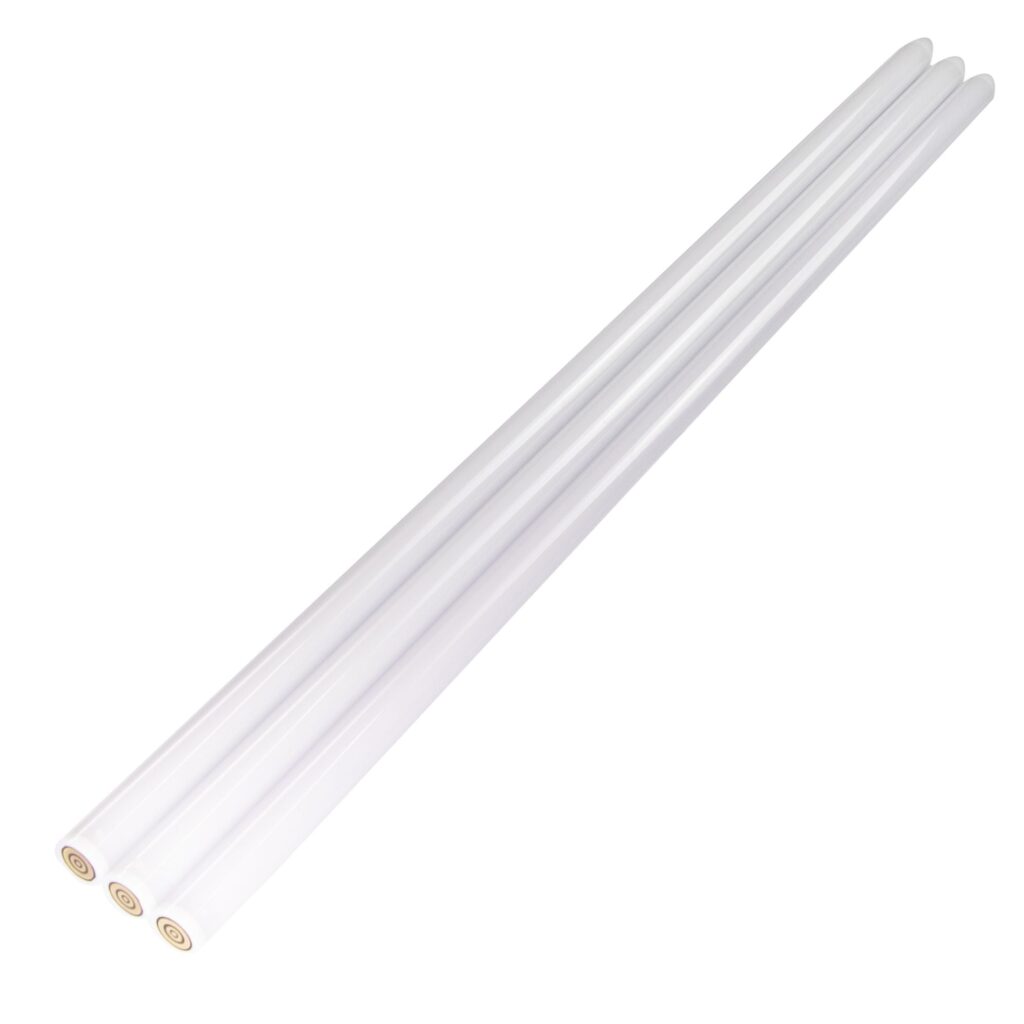
Our own blades are polycarbonate tubes with the electronics sealed inside, and we list them as a separate part rather than as an accessory, because that is how they behave.
What to ask: what a replacement costs, whether the blade is sold separately, and which blades are cross-compatible with the hilt.
The Six Numbers Together
The six numbers turn into three decisions: whether the saber is bright enough to be worth it, whether you can live with an hour of runtime, and whether you are willing to replace the blade.
| If this matters most | What to check | What to accept |
|---|---|---|
| Filming and photographs | Pixel count and even diffusion | Shorter runtime, and the blade is not for duelling |
| Light sparring | Blade construction and a spare cell | A replacement blade every season or two |
| Spinning and flow | Blade weight and balance point | A 32 inch blade rather than 36 |
| Cosplay and display | Ignition effects and blade length by height | Fewer pixels than a premium build |
| Heavy contact | Something else entirely | This is the wrong product for it |
The last row is the one we would rather say out loud. A pixel blade is a display and light-contact product, and buying one for full-contact duelling means buying replacement blades on a schedule.
Which Saber This Points At
If you want the six numbers to add up without reading three more pages, the short version is a two-strip blade of 100 to 150 pixels, a 3,200 mAh high-drain cell, and a hilt whose balance you can check before you buy.
Our Neopixel hilts run the same architecture described above, with a colour-cycling board so the blade colour is a setting rather than a purchase.
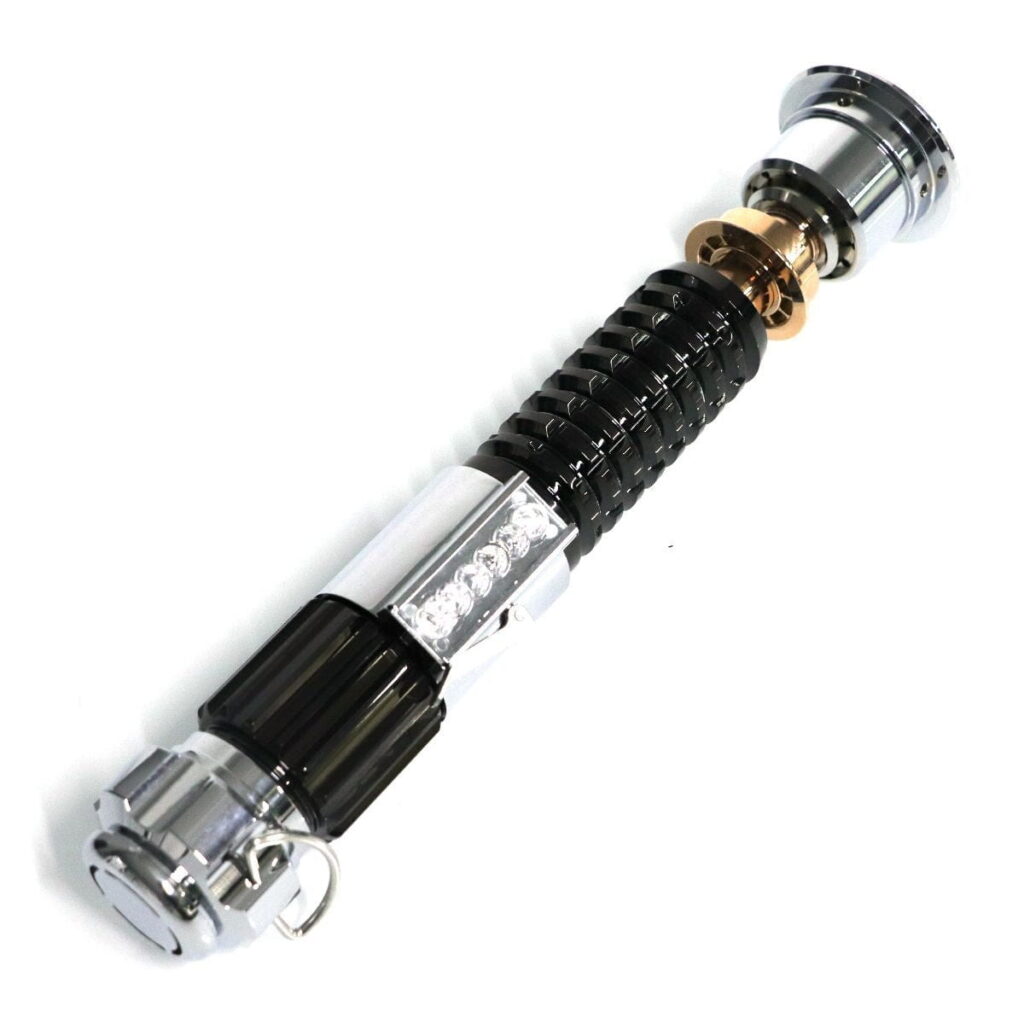
The hilt is the part that does not age, so it is the part worth spending on. Blades, cells and blades again are what you replace.
The three-way comparison
What a blade is made of
Weight and balance numbers
The baselit alternative
FAQ
Q1: How many LEDs are in a Neopixel blade?
A: About 100 to 150 pixels on a 32 inch blade, depending on strip density and whether the blade runs one strip or two. That works out to roughly 100 to 130 LEDs per metre on most builds.
Q2: How long does a Neopixel lightsaber battery last?
A: Roughly 40 to 60 minutes at full brightness on a 3,200 mAh cell, and longer at lower settings or on a single-channel colour. Runtime is capacity divided by current, so the brightness setting matters more than the brand of cell.
Q3: Can you duel with a Neopixel lightsaber?
A: Light sparring and choreography, yes, and full contact, no. The LED strip inside the blade is a flexible circuit board, and a hard edge-on hit can crack it at a solder joint and leave a dead spot.
Q4: Is Neopixel brighter than baselit?
A: Yes, at full output, because a pixel blade reaches roughly 1,500 to 2,500 lumens against about 800 to 1,200 for a single in-hilt LED, and the difference is most visible on blades longer than 32 inches.
Q5: Why is my Neopixel blade heavier than my old one?
A: Because the strip and the foam diffuser sit inside the tube. That adds roughly 100 to 160 grams, and all of it is at the far end, which moves the balance point two to four inches forward.
Q6: Can I use a baselit blade on a Neopixel hilt?
A: Only if the hilt accepts both, since a pixel hilt expects a three-pin connection carrying power and data while a hollow blade has no data line. Many hilts support both blade types, and the board is what decides.
Q7: What happens if a pixel stops working?
A: Usually one dead pixel or a short run of them, caused by a cracked joint in the strip. The tube is normally fine, so the fix is a replacement blade rather than a repair.
Q8: Do I need a spare battery?
A: If you are out for more than an hour, yes. A saber running under an hour on a charge is a session product, and a second cell costs far less than a second saber.
Q9: Does blade length change the runtime?
A: Yes, because a longer blade carries more pixels drawing the same current per pixel. A 36 inch blade pulls more than a 32 inch one at the same brightness setting, so the runtime drops.
Q10: Is a Neopixel saber worth it over baselit?
A: For filming, display, cosplay and ignition effects, yes. For heavy duelling or for a child, no, and a hollow blade will survive what a pixel strip will not.
Conclusion
Six numbers, one hour of runtime, and a blade you will replace rather than repair. That is what a Neopixel saber is, and knowing it before you buy is most of the decision.
Ask for the pixel count and the cell, then do the division yourself. If the answer is three hours, the brightness setting has been left out of the sentence.
Spend on the hilt and the cell, and treat the blade as a part with a lifespan. That is the version of this purchase that holds up after the first month.
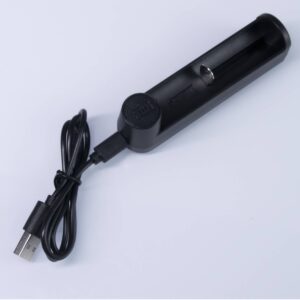
ISABER Lightsaber Battery Charger — USB-C 18650 Charger
Accessories / RGB & Baselit Lightsabers
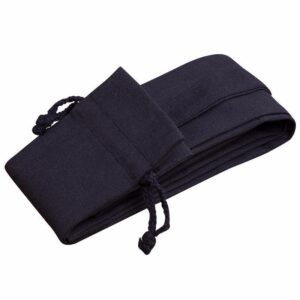
High-quality Thickened Canvas Lightsaber Bag
Accessories / RGB & Baselit Lightsabers