
No canon source assigns a lightsaber combat form by birthday. The birthday chart is fan-made and mixes Western sun signs with the seven forms; in canon a form comes from your teacher and lineage, your temperament, the era you fight in, and Council approval.
The chart is everywhere, and it is enjoyable. It is also not backed by anything in the films, the shows, or the reference books.
What follows is where the chart came from, what the seven forms actually are, and what canon says decides which one you learn.
What’s on This Page
- Where the Birthday Chart Comes From
- The Seven Forms, Briefly
- What Actually Determines a Form in Canon
- Teacher and Lineage
- Era and Threat
- Council Approval and Banned Forms
- How the Chart Is Genuinely Useful
- The Same Idea in Real Fencing
- How to Pick a Style to Practice
- Frequently Asked Questions
Where the Birthday Chart Comes From
The chart is fan-made, circulated widely by a lightsaber retailer, and it does not agree with itself from one version to the next.
Its structure is Western astrology: twelve sun signs mapped onto seven forms. That is already a mismatch, since twelve does not divide into seven.
Different versions resolve it differently. Some give a sign one form, some give a sign two, and the assignments move between editions.
That inconsistency is the tell. A system with a real origin behind it tends to be stable; a system assembled for a quiz page does not.
What the forms themselves are built on
The seven forms are real within the setting, but they were never codified on screen. They were described in reference books, beginning with the cross-section guides published in 2002.
For years that material sat in the expanded universe rather than in canon proper, which is why the films never name a form out loud.
An academic article in the peer-reviewed Martial Arts Studies journal has since treated the seven forms as a real object of study, which tells you how thoroughly fans have documented a system the films left implicit.
The Seven Forms, Briefly
The seven forms run from a basic all-purpose style through duelling, defence, acrobatics, counter-attack, balance and aggression.
| Form | Focus | Known for |
|---|---|---|
| I — Shii-Cho | Fundamentals | Every student starts here; wide, simple cuts |
| II — Makashi | Blade against blade | Precision duelling; a curved hilt helps |
| III — Soresu | Defence | Absorbing fire and outlasting an opponent |
| IV — Ataru | Acrobatics | Leaps and speed; demanding on the body |
| V — Shien / Djem So | Counter-attack | Turning a defence into an immediate reply |
| VI — Niman | Balance | Bladework blended with the Force |
| VII — Juyo / Vaapad | Aggression | Relentless pressure; restricted for most |
The order matters. Shii-Cho is the floor everyone stands on, and the later forms are specialisations built over it rather than replacements.
This is also why the forms resist a clean personality mapping. A defensive fighter and an aggressive fighter both start in Form I.
What Actually Determines a Form in Canon
Four things decide a form in canon: your teacher, your temperament, the threats of your era, and whether the Council permits the form at all.
The chart is not a system that was discovered; it is a mapping applied on top of the forms afterwards.
| Factor | How it plays out | What it looks like |
|---|---|---|
| Teacher and lineage | The student inherits a style, then revises it | An apprentice moves from the acrobatic fourth form to the defensive third after his master is killed |
| Temperament | The style reflects how the user reacts under pressure | Patient fighters drift to the third; aggressive ones to the fifth and seventh |
| Era and threat | What the Order is actually fighting shapes what gets taught | Defensive study rises when the enemy carries blasters rather than blades |
| Council approval | Some forms are permissioned, not freely taught | The seventh is restricted to a small number of practitioners |
None of the four is a birth date. Two of them are things you choose or inherit, and two of them are things you cannot control.
Teacher and Lineage
A student learns what their master teaches, and changes when the master changes.
The clearest case is the shift from Ataru to Soresu. A master who favoured the acrobatic fourth form died in a duel, and his apprentice rebuilt his style around defence as a direct response.
That is a lineage decision, not an astrological one. The new form was chosen because of a failure, not a birthday.
Curved hilts point the same way. A curved design suits the precise blade-to-blade work of Makashi, which is why the duellists who use that form carry them rather than straight tubes.
Era and Threat
The form that gets taught changes with what the Order is actually fighting.
In an era of duels against other blade users, precision bladework pays. When massed ranged fire is the threat, deflection and endurance pay instead.
Soresu became the dominant defensive study when the Jedi were facing massed ranged fire rather than other swordsmen.
That is a strategic adaptation, and it explains why the forms spread unevenly across the timeline rather than mapping evenly onto people.
Council Approval and Banned Forms
Some forms are restricted rather than taught freely; the seventh is famously hard to use without falling into it.
The most aggressive form draws on the user’s own anger and channels it. Only a small number of practitioners are permitted to study it.
So even in canon, a form is not purely a personal preference. It is partly an institutional permission.
How the Chart Is Genuinely Useful
Use it as a prompt, not a rule: it asks you which of seven approaches you would want to be yours.
That question is worth answering. It gets people to read about all seven forms instead of defaulting to whichever one looks best on screen.
Just do not treat the answer as a verdict. Nothing in canon would recognise it.
If you post yours, say plainly that it is a fan chart. Half the arguments about this topic come from people mistaking a quiz for a reference.
The Same Idea in Real Fencing
Real martial arts do match style to the practitioner, but through body, temperament and teacher rather than birth date.
Fencing schools have historically favoured different guards and distances for different builds and temperaments.
Coaches still assign beginners to a weapon based on reach, patience and how they react under pressure, and they change that assignment after watching them fence.
That is the same four factors canon uses, minus the Council. The birthday chart is the one input no serious tradition uses.
How to Pick a Style to Practice
Pick by what you enjoy watching, then adjust once you have actually swung a saber for a few weeks.
- Start with Form I. Every style in the hobby assumes the basics, and Shii-Cho drills are where the footwork comes from.
- Choose by body, not by character. Acrobatic styles punish knees and ceilings; defensive styles reward patience you may not have.
- Train the form you are worst at for a month. Weakness is what a real teacher would build on, and it is the one input a chart cannot see.
- Match the blade to the form. A curved hilt suits precision duelling; a short blade suits close, fast work.
None of that needs your birthday. It needs a few weeks of practice and an honest look at what you keep getting wrong.
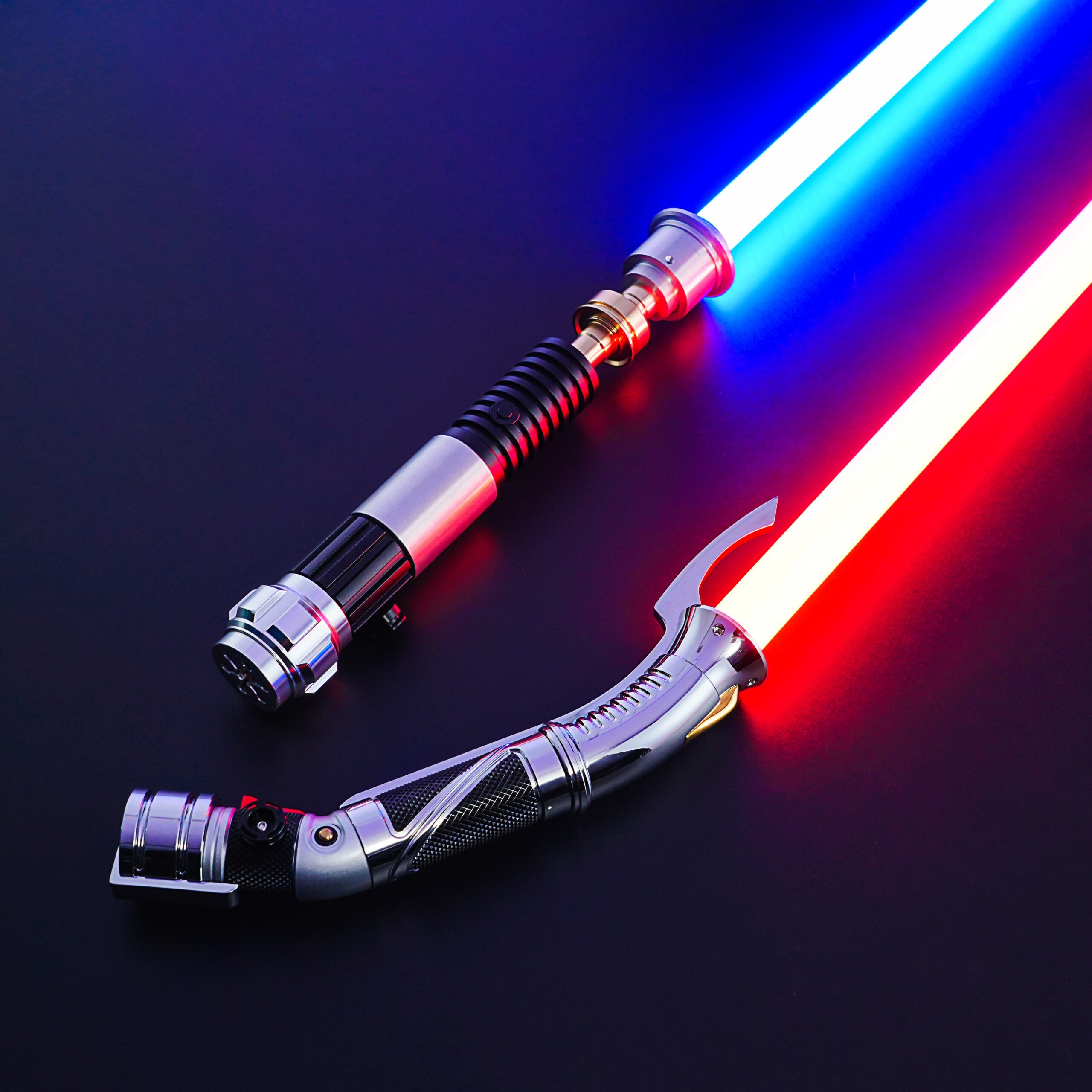

Count Dooku Lightsaber - Xenopixel V3 / Proffie 2.2 Curved Hilt Replica
Character Lightsabers / Proffie Lightsabers
Frequently Asked Questions
Q1: What lightsaber combat style am I based on my birthday?
A: There is no canon answer. The birthday chart is fan-made, mixes Western sun signs with the seven forms, and its versions disagree with each other. Canon ties a form to teacher, temperament, era and Council approval.
Q2: Is the lightsaber birthday chart official?
A: No. It circulates widely and is often shared by retailers, but nothing in the films, the shows or the reference books links a birth date to a form.
Q3: How many lightsaber forms are there?
A: Seven. Shii-Cho, Makashi, Soresu, Ataru, Shien or Djem So, Niman, and Juyo or Vaapad. Everyone begins with the first.
Q4: Where do the seven forms come from?
A: Reference books published from 2002 onward described them, and they stayed in the expanded universe for years rather than being named on screen. An academic article in the Martial Arts Studies journal has since documented them as a fan-studied system.
Q5: What determines a Jedi’s form in canon?
A: Their teacher and lineage, their temperament, the threats of their era, and whether the Council permits the form. The clearest documented case is an apprentice switching from the acrobatic fourth form to the defensive third after his master was killed.
Q6: Why is the seventh form restricted?
A: It channels the user’s own aggression, and only a small number of practitioners are permitted to study it. Using it without falling into it is the difficulty.
Q7: Which form should a beginner learn?
A: The first. Shii-Cho is the foundation every other form is built on, and it is where the footwork comes from.
Q8: Does hilt shape relate to combat form?
A: Yes, for one form in particular. A curved hilt suits the precise blade-to-blade work of Makashi, which is why duellists who favour that style carry curved designs.